In a stunning turn of events that has ignited fierce debates across social media and beyond, reality TV mogul Kim Kardashian has come to the defense of pop sensation Billie Eilish, lambasting the entertainment industry’s rampant hypocrisy.
The controversy erupted after Eilish’s bold remarks at the Grammy Awards, where she highlighted issues of inequality and privilege in Hollywood, sparking widespread protests from fans and critics alike.
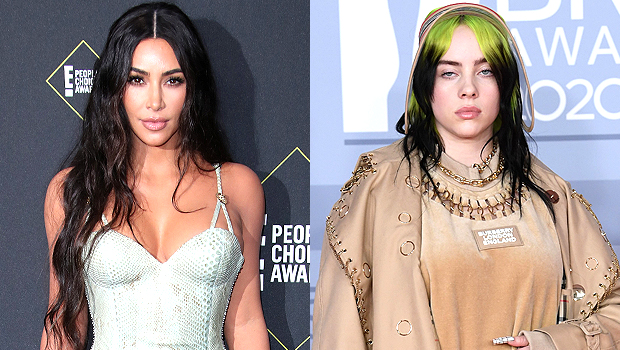
Kardashian’s intervention has not only amplified the discourse but also exposed deep-seated inconsistencies in how celebrities wield their influence.
The saga began innocuously enough at the Grammys, where Eilish, known for her unfiltered honesty, delivered a speech that questioned the fairness of industry accolades.
Her words resonated with some, but they infuriated others, leading to immediate backlash.
Protests outside the venue turned chaotic, with demonstrators chanting slogans against what they perceived as Eilish’s overreach.
Yet, as the dust settled, Kardashian stepped in with a pointed critique that cut to the core.
“It’s easy to preach from fortified grounds,” she declared in a widely shared statement, implying that many in Hollywood criticize from positions of unassailable privilege without facing real consequences.
This remark, delivered with her characteristic bluntness, shifted the narrative overnight, forcing the public to confront uncomfortable truths about celebrity activism.
But the story took an even more dramatic twist when a savvy law firm entered the fray.
Specializing in land rights and indigenous affairs, the firm proactively reached out to a Native American tribe whose ancestral lands border properties associated with Eilish’s family holdings.
In a move that stunned observers, the lawyers offered pro bono assistance to initiate proceedings that could result in Eilish’s expulsion from the area.
Their rationale? Eilish’s Grammy comments, while framed as mere opinions, were interpreted by the firm as potentially inflammatory toward marginalized communities, including Native groups often overlooked in celebrity-driven narratives.
“She’s just making an opinion, she’s not accusing anyone,” a spokesperson for the tribe stated, echoing Kardashian’s earlier defense but flipping it on its head.
This ironic reversal has transformed the initial hypocrisy call-out into a brutal litmus test for consistency.
If Eilish’s words are harmless expressions, why pursue legal action?
Conversely, if they carry weight, does that validate the protests against her?
The firm’s involvement has escalated the stakes, drawing in legal experts who argue that such tactics could set dangerous precedents for free speech in the public eye.
As details emerged, public reaction intensified.
Supporters of Eilish flooded online forums with messages of solidarity, decrying the law firm’s actions as opportunistic bullying.
Detractors, however, praised the move as a necessary check on celebrity overreach, pointing to historical grievances where indigenous rights have been trampled by the elite.
Kardashian’s role has drawn particular scrutiny; her defense, once seen as empowering, now risks being labeled as selective outrage.
Has she inadvertently fueled a fire that could consume one of the industry’s brightest stars?
The unfolding drama raises profound questions about accountability in fame.
Why do some voices echo without repercussion while others face exile?
As the tribe deliberates and legal papers loom, the entertainment world holds its breath.
This isn’t just a celebrity spat; it’s a mirror reflecting society’s fractures, compelling us to ask: In the fortress of Hollywood, who truly preaches from fortified grounds?
The answers may redefine how we view power, privilege, and the price of speaking out.