In the glittering world of Hollywood, where spotlights often mask personal turmoil, actress Nikki DeLoach has emerged from what she describes as her most grueling season yet. Known for her warm roles in Hallmark films, DeLoach’s real-life script has been one of relentless trials, forcing her to confront the fragility of life head-on.
But what began as quiet whispers of concern has unfolded into a raw testament of endurance, leaving fans and observers questioning the true cost of unwavering strength.
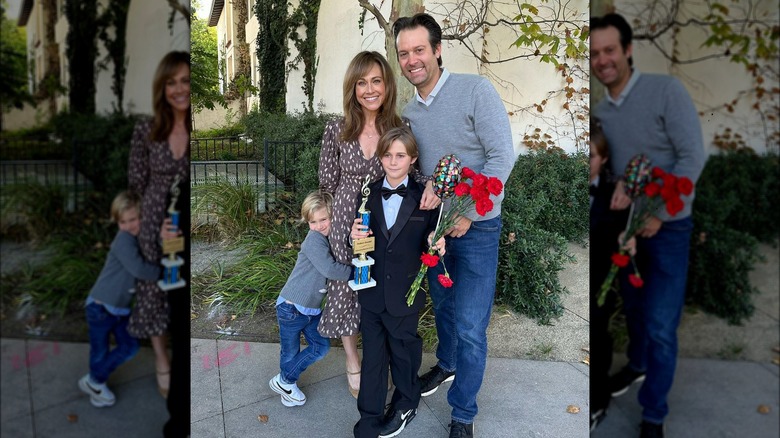
It started subtly, with DeLoach’s youngest son facing a series of life-threatening heart surgeries. The boy, barely out of infancy, endured procedures that tested the limits of medical science and parental fortitude. DeLoach, thrust into the sterile corridors of hospitals, found herself grappling with decisions no mother should face.
“I learned how to show up even when I couldn’t fix anything,” she revealed in a candid interview, her voice laced with a mix of defiance and vulnerability.
These surgeries were not mere medical footnotes; they were brutal invasions into her family’s core, each incision a reminder of mortality’s shadow. Yet, amid the beeping monitors and anxious waits, gratitude flickered like a fragile flame, coexisting with the crushing weight of hardship.
Compounding this ordeal was the devastating decline of her father, stricken with advanced dementia. Once a pillar of wisdom, he now wandered in a fog of forgotten memories, requiring constant vigilance.
DeLoach’s days blurred into a punishing cycle: mornings spent advocating with cardiologists for her son, afternoons repeating the same soothing conversations with her father, who no longer recognized the world around him.
“Some days I sit with doctors, other days I repeat the same conversations,” she shared, painting a portrait of a life suspended in limbo.
This rhythm offered no quick resolutions, no heroic triumphs to applaud. Instead, it demanded a quiet, daily practice of resilience, one that society rarely celebrates but desperately needs.
As the months dragged on, the toll became undeniable. Balancing hospital vigils with homebound caregiving, DeLoach adapted with a determination that bordered on superhuman.
But adaptation came at a price.
“I always try to adapt, but it unknowingly leaves my legs exhausted,” she confessed, a metaphor for the bone-deep fatigue that seeped into every fiber of her being.
Her body, once graceful on screen, now ached from the invisible burdens: the sleepless nights, the emotional whiplash, the fear that one more setback could shatter it all.
Critics might argue that celebrities like DeLoach have resources others lack, yet her story pierces that facade, exposing the universal truth that pain spares no one.
What makes DeLoach’s journey so compelling, and indeed controversial, is her refusal to crumble.
In an era where vulnerability is commodified, her narrative sparks debate:
Is this resilience a badge of honor or a silent scream for help?
Does sharing such intimate struggles empower others, or does it romanticize suffering?
As she emerges from this storm, DeLoach’s experiences challenge us to reconsider how we define strength, not as a fleeting victory, but as the gritty persistence through chaos.
Her story doesn’t end with tidy bows; it lingers, urging readers to reflect on their own hidden battles.
In DeLoach’s words, gratitude and hardship don’t compete, they collide, forging something unbreakable.
But at what human cost?
This is the question that echoes long after the final page turns, demanding we confront the raw edges of empathy and endurance in our own lives.