In the glittering yet merciless world of reality television, few moments cut as deeply as the sight of a mother refusing to cross the threshold of a county jail to see her own son behind bars.

When the son of a prominent Real Housewives star was arrested last month on serious felony charges, the news sent shockwaves through the tightly knit circle of affluent castmates and their millions of followers.
What followed, however, was not the expected flood of maternal anguish played out on camera—instead, it was a chilling, deliberate distance that has left viewers and former allies alike questioning the true nature of love, loyalty, and forgiveness.
The star, visibly shaken yet composed in a brief statement released through her publicist, offered only these raw words: “Seeing my son in jail is a pain no mother can bear.”
The sentence, delivered with a tremor that betrayed the storm beneath her polished exterior, might have earned instant sympathy. It did not. Within hours, the internet turned.
Comment sections filled with accusations of coldness, abandonment, even cruelty. How could a mother—especially one who has built a public persona around family drama and emotional transparency—refuse to visit her child in his darkest hour?
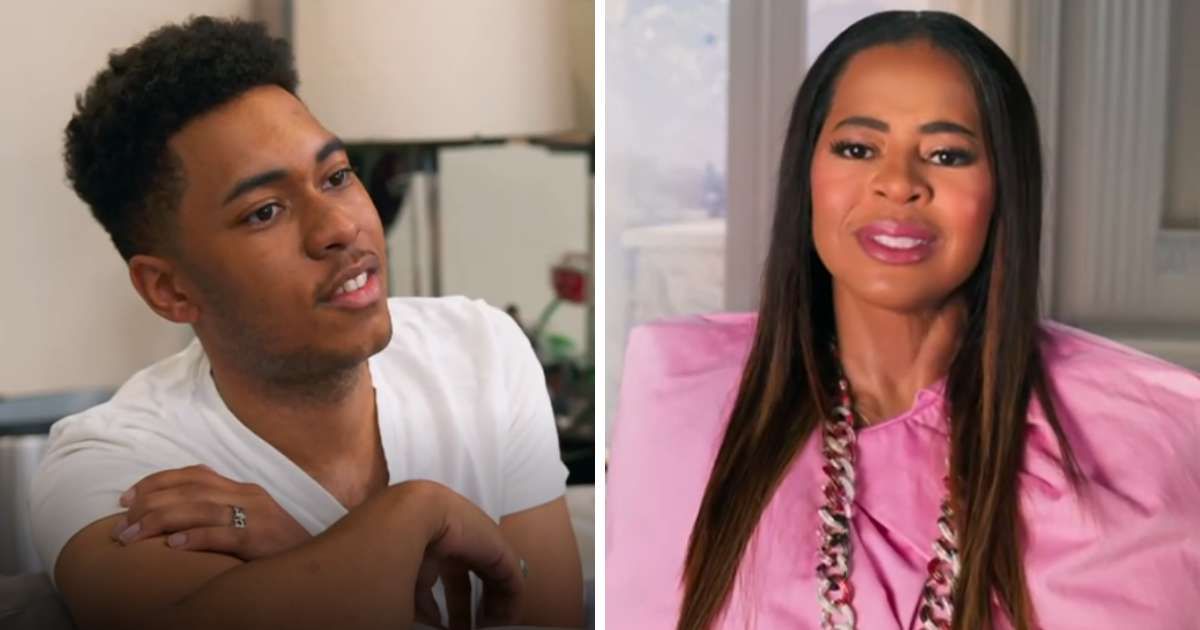
As the backlash intensified, she doubled down in a single, haunting follow-up posted to her personal account: “Sometimes love means keeping your distance so you don’t break down.”
The line landed like a quiet detonation. What began as whispers among the cast quickly hardened into open judgment. One longtime co-star, speaking anonymously to a major outlet, confessed, “We all thought she would run to him, tears and all. Instead she’s… protecting herself. Or punishing him. Or both. And none of us knows which version we can live with.”
Behind the carefully curated Instagram stories and cryptic captions lies a far more disturbing possibility that few want to voice aloud: the arrest was not a sudden fall from grace.
Multiple sources close to the family now confirm that troubling signs—escalating arguments, missing money, late-night police visits—had been accumulating for over two years.
The son’s legal troubles, once dismissed as “young man mistakes,” are increasingly seen as the inevitable endpoint of a pattern the mother had witnessed, confronted, and ultimately decided she could no longer absorb.
What makes this story so magnetic—and so divisive—is the razor-thin line it forces us to walk. Is her refusal an act of ultimate self-preservation, the only way a mother can save herself from being destroyed by a child’s choices?
Or is it the final, unforgivable severing of the umbilical cord—a punishment disguised as tough love? The longer she stays away, the louder the question becomes: when does protection become rejection, and when does rejection become something the public can never absolve?
In the end, the jail bars do not only separate a son from freedom. They have erected an invisible wall between a mother and the world that once adored her. And as the weeks pass without a single photo of a prison visit, one truth grows impossible to ignore: some boundaries, once broken, may never be rebuilt.