If you believe Hallmark’s bold new series “Hope Valley: 1874” is just another cozy prequel for die-hard fans of “When Calls the Heart,” or that you can skip it because you lack a Hallmark+ subscription or simply dislike rugged Western tales, prepare to think again.
This is the one show that could quietly transform how you face the chaos of 2026.
After screening the first two episodes, with the premiere dropping on March 21, 2026, the verdict is unmistakable: “Hope Valley: 1874” is essential viewing for every person exhausted by today’s headlines, endless uncertainty, and the quiet ache for something real.
Here are three undeniable reasons your heart will feel lighter, stronger, and strangely hopeful the moment you press play.
The raw, unfiltered grit of frontier life hits first, and it refuses to let go.
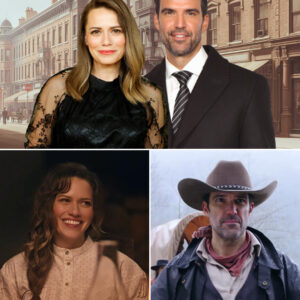
At the center stands Rebecca Clarke, portrayed with breathtaking depth by Hallmark favorite Bethany Joy Lenz.
This determined widow packs up her 11-year-old daughter Sarah and leaves Chicago in a covered wagon, destination unknown, driven by a secret pain that viewers sense will unfold with devastating clarity.
When the wagon shatters on the trail, local rancher Tom Moore, brought to vivid life by Benjamin Ayres, charges in and saves them from disaster that feels terrifyingly close to fatal.
Yet Rebecca is never helpless.
She is steel wrapped in kindness.
She repairs wheels in pouring rain, trudges through ankle-deep mud, and claims her place among a tight-knit band of settlers and Gold Rush dreamers, the very group that history confirms will grow into the beloved town of “When Calls the Heart.”
Unlike that long-running favorite, which often paints the early 1900s in soft, picture-perfect tones, “Hope Valley: 1874” shows the truth without mercy.
Driving rain lashes every scene.
Emotions crack open raw.
In the second episode’s opening minutes, Lenz delivers a performance so naked and powerful that audiences will feel the widow’s grief in their own chests.
Life here is brutal, conflict-filled, and relentlessly hard, yet every guarded glance, every quiet yearning for human connection, mirrors our world today with startling precision.
One hundred fifty years later, that blind hope for better days still burns, and it will leave viewers arguing long after the credits roll: Is this the escape we need, or the mirror we have been avoiding?
The series refuses to soften the past, and that honesty becomes its greatest power.
While “When Calls the Heart” wraps its thirteenth season tomorrow, March 22, with Elizabeth somehow balancing teaching, single motherhood, and crises while barely breaking a sweat, “Hope Valley: 1874” tears the veil away.