THE SILENT SHATTERING: DANICA MCKELLAR’S POSTPARTUM NIGHTMARE
The image of Danica McKellar has long been one of academic brilliance and wholesome charm. Yet, behind the radiant smile of the “Wonder Years” star lay a harrowing secret that has now surfaced, transforming a private maternal choice into a nationwide scandal.
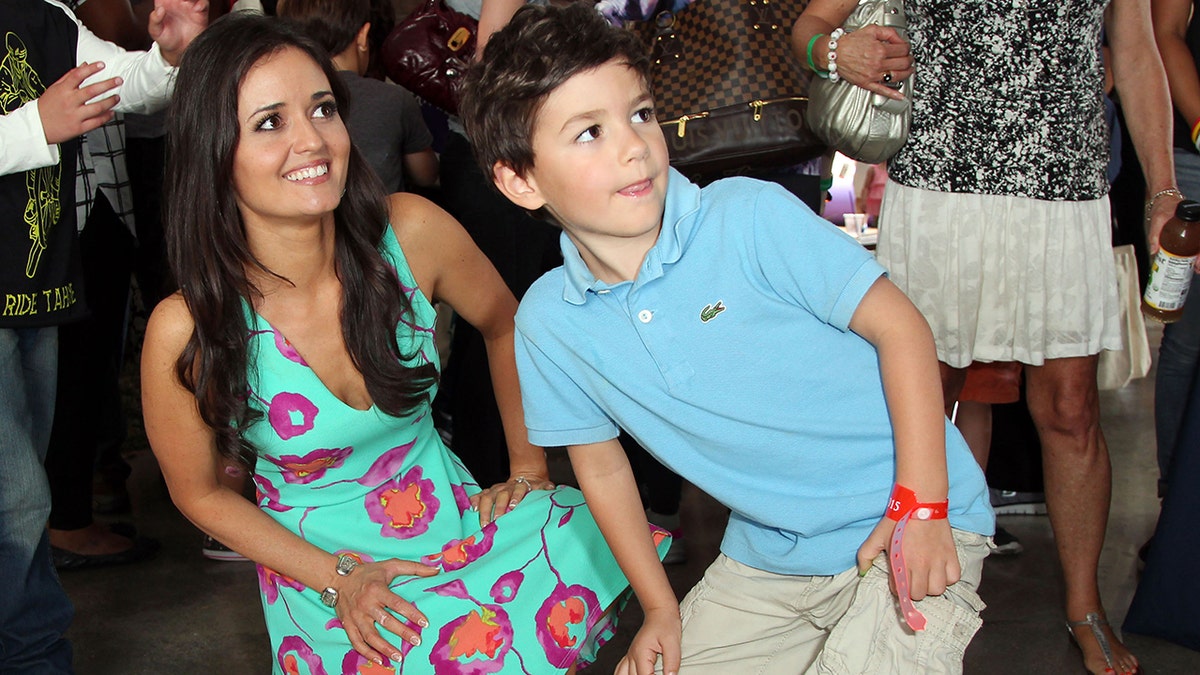
The actress has finally broken her silence on the traumatic reality following the birth of her son, Draco, revealing a postpartum journey defined not by joy, but by a devastating emotional collapse that paralyzed her life.
The controversy centers on a practice often whispered about in holistic circles but rarely thrust into the unforgiving glare of the Hollywood spotlight: the consumption of her own placenta.
What McKellar envisioned as a sacred, healing ritual for her body quickly spiraled into a psychological prison. “I felt completely devastated by the intense public condemnation,” McKellar confessed, her voice trembling with the weight of the memory. The actress, who has always valued logic and education, found herself defenseless against a tidal wave of societal Revulsion.
The descent into isolation was gradual but absolute. In the fragile days following childbirth, McKellar sought solace in the shared experiences of supportive mothering communities. She found temporary peace in their encouragement, believing she was reclaiming her vitality.
However, the sanctuary was short-lived. As news of her choice leaked to the masses, the atmosphere shifted from curiosity to a malicious, coordinated assault on her character. The “beloved actress” was suddenly rebranded as a pariah, leaving her utterly overwhelmed.
The emotional shock was not merely a reaction to mean comments; it was a fundamental shattering of her reality. McKellar admitted that the sudden, vitriolic criticism from the public left her unable to function. This was not just a “celebrity scandal” but a raw, bleeding wound in her personal life.
The woman who mastered complex mathematics could not calculate a way out of the societal judgment that branded her choices as “grotesque” and “insane.”
This revelation has ignited a fierce debate across the country. Critics argue that such practices are a bridge too far, while supporters claim the public’s “malicious reaction” is a symptom of a culture that seeks to police women’s bodies even in their most vulnerable moments.
McKellar’s confession serves as a chilling reminder of how quickly the “masses” can turn admiration into a weapon of destruction.
For McKellar, the scars of this public shaming remain deep. She was not just a mother struggling with hormones; she was a woman “utterly paralyzed” by a world that refused to grant her grace. As this story continues to unfold, one question remains: Have we, as a society, become so obsessed with judgment that we have lost our basic capacity for maternal empathy?