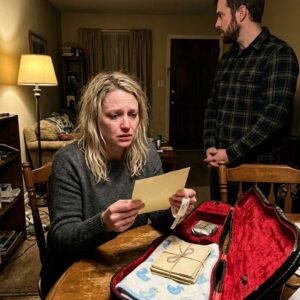
This is what makes betrayal inside family systems so annihilating. It does not add pain to an otherwise stable life. It rewrites the life backward. It reaches into memory and poisons it retroactively. Holidays become suspect. Kindness becomes camouflage. Support becomes strategy. Suddenly the person who appeared most dependable is revealed not merely as dangerous, but as someone who may have curated his own credibility as a shield.
And children often see that before adults do.
That may be one of the deepest aches inside this story. Lily, only eight years old, had already understood what the grown-ups around her had not. She knew there was a pattern. She knew there was danger attached to the garage. She knew she needed proof. She knew she might have to get out before the adults got there emotionally. She knew, in some terrible instinctive way, that the system around her could still fail unless she brought evidence with her.
That is why her line at the end lands like a final collapse:
“There’s one more file, Mommy. The one where Grandpa says why Daddy had to die.”
Not why Daddy crashed.
Not what happened that night.
Why Daddy had to die.
The wording matters because it suggests intention, not accident. Necessity in the mind of the speaker. A decision dressed as inevitability. If Richard said those words on a recording, then Mara is not only facing the possibility that her father hurt her daughter and lied about her husband’s death. She is facing the possibility that he has a reason. A rationale. A logic he believes justifies what he has done.
That is often the most terrifying thing about people like this. Not that they act without motive, but that they construct motives that let them live with themselves. They create private moral systems where control is protection, punishment is discipline, and murder—if that is what this becomes—is explainable. That is how monsters survive in communities. They do not walk around cackling in plain sight. They build reputations sturdy enough to hold their secrets.
Richard Callahan appears to have done exactly that.
The most chilling detail of all may be that Mara is a doctor. A highly trained professional. A woman used to reading symptoms, assessing risk, functioning under pressure. And still, even she did not see this in time. That matters because it cuts against the easy lie people tell themselves after stories like this: I would have known. I would have seen the signs. My family is different.
Maybe not.
Maybe the point is that people like Richard become dangerous precisely because they understand the social value of calm. They know how to perform goodness in public so thoroughly that anyone who questions them risks sounding unstable. They learn where trust lives in a community, and they move into that house until no one can imagine it without them.