The long, difficult road to full economic and emotional recovery would undoubtedly take many years, if not entire decades, to complete.
But as the heavy rain tragically continued to fall from the darkened skies, the immediate focus remained entirely on saving human lives.
The morning light completely failed to pierce through the thick, suffocating blanket of storm clouds that choked the Hawaiian horizon.
Instead of a vibrant sunrise, the residents were greeted by a dull, gray illumination that only highlighted the sheer scale of the overnight destruction.
Trees that had proudly stood for over a century were violently uprooted, their massive root systems exposed like the broken bones of the earth.
Power lines lay dangerously submerged in the murky, swirling pools of water that now occupied the spaces where children usually played.
The familiar sounds of tropical birds singing were entirely replaced by the relentless, mechanical thrumming of rescue helicopters circling overhead.
Mayor Rick Blangiardi had barely slept a wink, his eyes heavily bloodshot as he reviewed the latest, increasingly grim damage reports from the central command center.
Every piece of paper handed to him contained more heartbreaking news of collapsed bridges, overwhelmed dams, and stranded civilian populations.
He knew that the words he chose to share with the public carried immense weight, which is why he refused to sugarcoat the catastrophic reality of the situation.
The term catastrophic was not used lightly in a place that regularly experienced the violent whims of tropical weather systems.
It meant that the fundamental systems of daily life had been completely shattered and would require a monumental, unprecedented effort to rebuild.
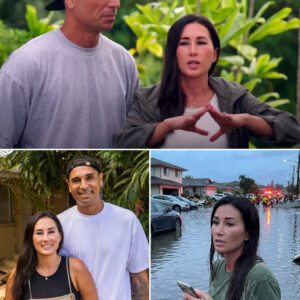
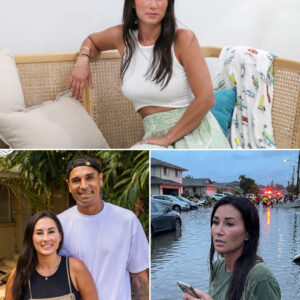
Back in her living room, Tristyn Kalama watched a neighbor’s beloved family car float sideways down the street, bumping violently against submerged mailboxes and floating debris.
The sheer velocity of the water was mesmerizing in the most terrifying way imaginable, a brute force of nature that cared absolutely nothing for human architecture.
She thought about the countless families she had personally helped through her television work, families who had poured their entire life savings into creating their dream island homes.
Now, those very same homes were slowly filling with toxic, brown sludge that ruined drywall, destroyed cherished family photo albums, and washed away hard-earned comfort.
The emotional toll of watching her beautiful island community suffer so deeply was physically painful, a tight knot of anxiety resting heavily in her chest.
Her video message had been a spontaneous act of utter desperation, born from a profound realization that human hands alone could not stop the rising tide.