seemed important.
Everything.
Waiting became its own punishment.
Dana sat on a molded plastic chair and replayed the morning from the beginning.
Caleb had been strangely pleasant when the alarm rang.
He made coffee.
He even carried her tote from the kitchen counter to the entry bench while she went upstairs for her blazer.
He had reminded her to bring the blue travel pouch for chargers, though she could not remember packing one.
At the curb outside Terminal 4, he insisted on taking the bags from the rideshare while she checked them in on her phone.
At the security bins, he touched her tote again, setting it down with both hands.
None of it had seemed unusual in the moment because she had spent years normalizing whatever kept the peace.
The peace had not been real for a long time.
Dana worked as a senior compliance consultant for a medical logistics company, the kind of job built on precision, documentation, and the quiet assumption that one bad decision could destroy an entire system.
Caleb used to tease her about spreadsheets and backup folders and color-coded tabs.
Then he lost his marketing job, and the teasing turned meaner.
He said her structure was control.
He said her promotions were luck wrapped in arrogance.
He said she talked to him like a project that needed fixing.
The first year after his layoff, Dana defended him to everyone.
By the second, she was defending herself to him.
The financial cracks showed up before the emotional ones did.
Small transfers from their joint account.
Late-payment notices he claimed were mistakes.
Sports-betting apps left open on his tablet.
A credit-card statement with cash advances Dana knew she had not taken.
When she confronted him, Caleb shifted effortlessly between shame and anger.
Sometimes he apologized and promised to delete the apps.
Sometimes he accused her of spying.
Once, standing in their kitchen at midnight, he told her that if she had believed in him a little more, he would not need “escapes.” Dana remembered the way he smiled after saying it, already certain the argument had become her fault.
Two nights before the flight, Dana had made a decision she had been postponing for months.
She met with a divorce lawyer over video after Caleb claimed he was out with an old friend.
She did not tell him.
She was not ready for the explosion.
She planned to take the anniversary trip, come home, separate finances, and then end the marriage with a paper trail and a witness nearby.
But Caleb had always been better at snooping than she gave him credit for.
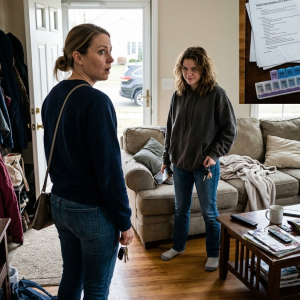
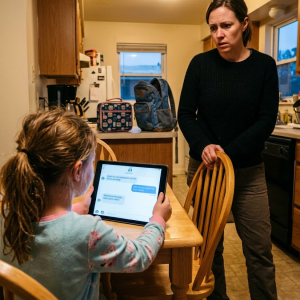
When Dana returned from work the next day, her iPad had been moved half an inch on the coffee table.
Her email app was open to a confirmation from a family law office.
Caleb said nothing that night, but he was almost too agreeable the next morning, wearing the easy grin that used to charm bartenders and landlords and complete strangers.
Nina Patel arrived before detectives transferred Dana downtown.
She was compact, calm, and unsentimental, which immediately made Dana trust her.
Nina listened without interrupting, then asked Ruiz a question so simple it seemed almost impolite.
Was there any evidence, besides proximity, that the contents of the tote belonged to Dana? Ruiz said