this from a distance she tried to call dignity.
The thaw came on a stormy evening in October.
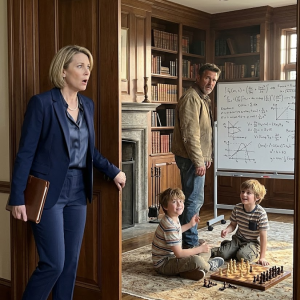
Thunder shook the house and Lily, awakened by the noise, wandered frightened into the upstairs corridor while Emily was helping Paul clean a spill in the kitchen and Nathan was on a call with Singapore.
Margaret, hearing small footsteps, stepped out of her room and found the girl clutching the rabbit with both hands, eyes wet but silent.
Something about that sight pierced an old place in her memory.
Nathan had been six when his father died.
For months afterward, any storm had sent him searching for her in the dark.
Without comment, Margaret crouched, opened her arms, and asked Lily whether she preferred tea or warm milk.
Lily chose milk.
Ten minutes later the child was curled on Margaret’s settee, half asleep beneath a cashmere throw that had once belonged to Nathan’s grandmother.
When Emily arrived, breathless with worry, Margaret looked up and said only, She is safe.
It was not an apology, but it was the first honest step toward one.
The real apology came a week later in the conservatory.
Margaret had asked Emily to meet her there privately, which made Emily brace for combat.
Instead, Margaret stood beside the winter roses and handed her a slim folder.
It was the investigator’s report.
I had this done, Margaret said.
I wanted proof that you were deceiving my son.
What I found was proof that I judged a woman of character by the filth other people were willing to say about her.
I cannot excuse that.
I can only tell you that I was wrong.
Emily held the folder but did not open it.
Then Margaret did something that startled them both.
She reached out and touched the back of Emily’s hand with stiff, unfamiliar gentleness.
You have loved children who were not yours by birth more faithfully than many parents love their own, Margaret said.
Nathan chose well.
Forgiveness did not bloom in one cinematic instant.
It arrived slowly, in repeated acts.
Margaret began attending Lily’s recitals.
She quizzed Johnny before science exams and secretly delighted when he corrected her.
She pretended irritation each time Paul dismantled some harmless appliance under supervision, yet she kept sending the butler to fetch him old radios from storage.
The staff, seeing Margaret bend, bent with her.
The mansion changed tone.
Laughter stopped sounding like an intrusion and became part of the house’s rhythm.
Emily changed too.
Once the children were settled and the constant emergency of survival loosened its grip, Nathan encouraged her to ask what she wanted beyond endurance.
The question stunned her.
For years she had wanted only rent paid, homework finished, fevers lowered, and enough food in the cupboards.
Desire had become a luxury she did not practice.
What emerged, slowly, was nursing.
The memory of the women who had cleaned her burns, changed her dressings, and treated her like a person instead of a scandal had never left her.
Nathan paid nothing in secret and made no grand speeches.
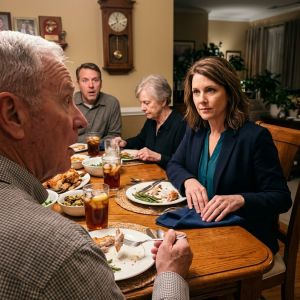
He simply sat beside her at the dining table while she filled out applications for a part-time nursing program, then rearranged his schedule so he could handle school pickups when she had evening classes.
Years folded gently after that.