began solving the next hour, then the next day, then the next month.
Two days later, Lucía left the hospital with five infants, a stitched body, and the kind of silence that follows humiliation too large for tears.
Veracruz did not welcome her gently.
Small towns rarely do when rumor gets there first.
By the time Lucía arrived, people were already whispering that the rich husband had discovered a scandal.
Some pitied her.
Some judged her.
Some stared openly at the babies.
Mateo, Daniel, Lucas, Ángel, and Samuel became known before they could walk as the children whose faces had supposedly ruined a marriage.
Lucía rented two cramped rooms behind a mechanic’s shop, where the smell of oil clung to the walls and the summer heat never really left.
The first years were brutal in the quiet, repetitive way poverty often is.
Lucía sewed at night until her fingers cramped.
Elena sold tamales at dawn.
A neighbor let Lucía wash laundry for extra cash.
Five babies meant five appetites, five fevers, five crying fits, five pairs of shoes to outgrow at nearly the same time.
There were nights when Lucía pretended she had already eaten so the boys could have second portions.
There were weeks when the power flickered out and she sat by the window fanning all five children while mosquitoes traced circles in the air.
Yet even in those hardest years, the house did not become bitter.
Lucía refused to let Alejandro’s rejection define the emotional climate of her sons’ childhood.
She named them with care and meaning.
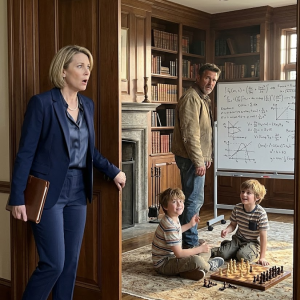
Mateo was thoughtful and steady.
Daniel watched everything with a scientist’s concentration.
Lucas took apart broken toys and rebuilt them into stranger, better things.
Ángel had the gentlest instincts of the five and cried whenever anyone else was hurt.
Samuel asked questions that never seemed to end, questions about adults, rules, fairness, and why some people lied so easily.
At night, after the boys had finally fallen asleep, Lucía kept a metal box beneath her bed.
Inside it were the papers she could not afford to lose: hospital bracelets, discharge forms, her marriage certificate, baby photos, the handwritten note from the nurse who had called Elena, and the few letters from the Montoya legal office that coldly referred to her children without using their names.
She never showed the box to anyone when the boys were young.
But she kept it because some stubborn part of her understood that truth, however delayed, still needed a witness.
The boys learned early that the world could be cruel about things children do not choose.
At school, classmates repeated the insults they heard at home.
Some adults said the brothers looked like foreigners.
Others said worse, lowering their voices only when Lucía passed.
The brothers came home with questions before they had the language to phrase them cleanly.
Why didn’t their father visit? Why did people look at them that way? Why did their skin make strangers so certain they knew the story? Lucía never lied.
She told them their father had abandoned them because he was a weak man who cared too much about appearances, and that weakness in an adult was never the child’s fault.
When they were old enough to understand more, she explained something else.
Families carry histories in