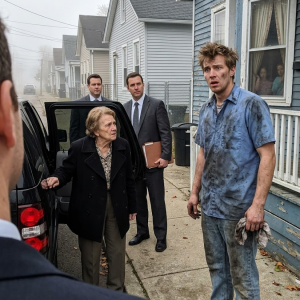
I live outside Asheville, in the kind of town where people still wave from porches and pretend that makes them safe.
After my husband left, the house got too quiet and the bills got too loud, so I turned the old guest cottage behind my place into a rental. It sat past the vegetable beds and the pecan tree, half-hidden by boxwoods my father planted before he died. It wasn’t fancy. One room, a kitchenette, a narrow bathroom, peeling white trim, and a porch swing that creaked when the wind changed direction. Most people who stayed there were forgettable in the ordinary ways. Traveling nurses. Divorced men between apartments. A woman who sold handmade soaps at craft fairs and left behind lavender wax in the sink drain.
Then Evelyn Shaw answered my listing.
She arrived with one navy suitcase, a beige raincoat, and the sort of posture older women have when they were taught young that falling apart in public was vulgar. She looked to be in her seventies. Her hair was silver and pinned neatly back. She wore a pearl ring with a nick in it and sensible shoes polished to a dull shine.
I started to show her the place.
She stopped me, handed me an envelope, and said, “Six months.”
I opened it and found cash.
“Mrs. Shaw, you haven’t even seen the bathroom.”
She gave the room a quick glance. “I know what I need.”
Then she added, in the same tone someone might use to request fewer towels, “And if anyone comes asking after dark, do not tell them you’ve seen me.”
I thought ex-husband.
I thought adult son with boundary problems.
I thought family feud, unpaid money, maybe one of those local dramas that grow like mold in small towns and make everyone choose sides at church.
I smiled the way women do when we want to stay polite without getting involved.
“All right.”
She didn’t smile back.
The first two days she was almost invisibly perfect. She kept to herself, rose early, paid for groceries with exact bills folded into a ceramic bowl by my back steps, and asked for nothing that might connect her to the world outside my property. No television. No Wi-Fi password. No deliveries. No maintenance. No rides into town.
At night, though, the light in her cottage stayed on.
Twice, while washing dishes, I looked out my kitchen window and saw her standing still behind the curtain, not peeking exactly, but listening with her whole body for something beyond the trees.
The third evening, I made chamomile tea and sliced banana bread because nervous women need kindness more than they need interrogation. I carried the tray out through the damp mountain air and knocked softly.
No answer.
The door was cracked.
“Evelyn?”
Still nothing.
I pushed the door open just enough to step in.
Water was running in the bathroom. A drawer opened. Closed. Opened again. I should have set the tray down and walked back out.
Instead, my eyes landed on the nightstand.
Beside an open Bible and a bottle of pills was a framed school photograph.
A little girl.
Brown curls, green cardigan, gap-toothed smile.
I knew her face before my mind fully allowed it.
Lucy Bennett.
Eight years old.
Missing for four months.
Everyone in the county knew Lucy’s face. Her picture hung at the post office and the gas station. It was taped to the sheriff’s board. Volunteers had searched creeks, ravines, old barns, abandoned lots. Her mother had appeared on local television, shattered and dry-throated, saying her daughter’s name like the word itself might still call her home.