My attorney, who had spent twenty years professionally identifying nonsense in expensive language, said, “By reporting one of them as a trespasser at her own home?”
That ended the maternal script.
Then my mother made the mistake I had almost been waiting for.
She asked if I would “at least let Caroline use the house one last time for the wedding, if things got put back together.”
Even my attorney laughed.
Just once.
Softly.
My mother flushed.
And I understood then that she truly had not learned anything. She still thought the main problem was timing, not character. Still believed access to me was a family resource, not a privilege I could withdraw. Still assumed I would eventually tire of holding the line.
So I did something I should have done much earlier.
I cut the line clean.
Through counsel, I issued a formal no-access directive not just to the property but to any event, vendor coordination, delivery instruction, or representation involving my name, my address, or my accounts. The local vendors I used regularly got copies. So did the marina. So did the security firm. So did the HOA patrol. I built a fence out of paper, because paper had been the one language my family never believed I would use against them.
Caroline tried once more, three months later, through a mutual friend.
She wanted to “meet as sisters” and clear the air.
Translation: she wanted a stage where there were no officers, no attorney, no footage, no consequences, just her version of things and the old pressure on me to be the reasonable one.
I declined.
The mutual friend said, “She’s really hurting.”
I answered, “That makes two of us. Only one of us paid for both parties.”
That was the end of it.
Trevor married someone else a year later.
Good for him.
Caroline never married at all, at least not in the version of life I still bother to hear about. Last I knew, she told people the engagement ended because I had a breakdown. That story works for strangers until someone asks why police reports, certified letters, security footage, and a recorded trespass warning all seem to tell the same different story.
My mother still speaks to me occasionally.
Birthdays.
Brief holidays.
Messages that sound careful now, as if she finally understands there is a legal record attached to her worst instincts.
But the relationship never recovered.
That is not tragedy.
That is architecture.
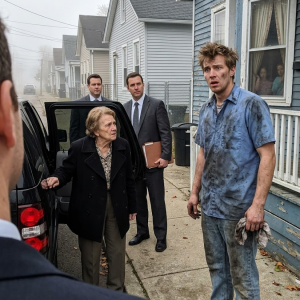
You cannot build trust where a woman once stood on your own front walk and called you a stranger for applause.
A year after the bridal brunch disaster, I held my own party at the lake house.
Small.
No tent.
No white dress.
No family performance.
Just close friends, grilled fish, cheap wine, music low enough to hear the water, and laughter that did not pause every time someone walked in.
At some point after sunset, one of my friends asked whether it still hurt to be there.
I looked across the patio where Caroline once stood smirking, where my mother once dialed the police, where I once walked away because dignity sometimes looks like strategic retreat.
Then I looked at the dock lights on the lake.
And I said the truest thing I know.
“Not anymore. Now it just feels like mine.”