form of self-respect.
He sent me to college with tuition paid and only one instruction: build something of your own.
I studied finance because I wanted to understand how money could warp a household.
Then I went to law school because I had learned that paperwork is where power hides.
Thomas never tried to shape me into a version of himself, though I suspect he enjoyed watching me develop his appetite for precision.
We spoke every Sunday evening.
He asked about classes, then firms, then clients.
Sometimes he said very little.
Yet even his silences felt attentive, as if he were making room for my thoughts to arrive whole.
By the time I was twenty-eight, I was a corporate attorney in Chicago handling transactions large enough to make junior associates nervous.
I was good at my work, ruthless in negotiation when I needed to be, and outwardly composed in a way that made people underestimate how much of me had been built from old fear.
Thomas was proud, though he expressed it obliquely.
He would forward a newspaper article about market movements and add a dry note about whether my clients were likely panicking.
He never missed my birthday.
He never used the word rescued.
He acted as if the life I had now was inevitable, which may have been the most generous fiction anyone had ever maintained for me.
Then, on an ordinary Wednesday afternoon, my assistant transferred a call from a number I did not recognize.
The voice on the other end belonged to Martin Feldman, Thomas’s estate attorney.
He spoke gently, which terrified me before the words even landed.
Thomas had suffered a massive stroke that morning.
He had been taken to Northwestern Memorial.
He was gone before I reached the hospital.
I remember standing in the parking garage afterward with my hand pressed against a concrete pillar, trying to understand how the city could still be making noise when the one steady force in my life had just stopped.
Grief made the next several days strangely mechanical.
There were suits to choose, people to call, flowers to refuse, casseroles to ignore.
Thomas had arranged most things in advance, of course.
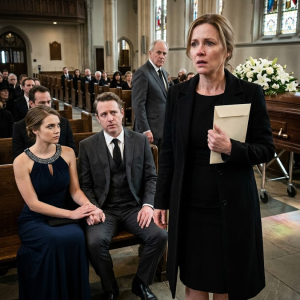
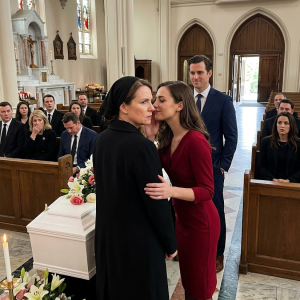
His funeral was small by design.
Former employees came.
A scholarship director from a community college came.
The woman who had cleaned his house for twenty years cried openly in the second row.
No one from my birth family appeared, and I was grateful for that.
I thought perhaps, with all their talent for sensing money from a distance, they still had not heard.
I underestimated them.
The will reading took place the following Monday in Feldman’s conference room on the thirty-second floor of a downtown building Thomas had always considered architecturally dishonest.
I arrived early, wearing black and carrying the kind of emotional restraint lawyers learn to use as body armor.
The room overlooked the river.
The table gleamed.
A tray of untouched coffee sat on a sideboard.
I was reviewing the pattern of rain drying on the windows when the door opened and my mother walked in.
She had aged expensively.
Her hair was highlighted, her coat was cashmere, and her expression held that practiced blend of confidence and grievance I remembered from childhood.
My father trailed behind her in a suit that did