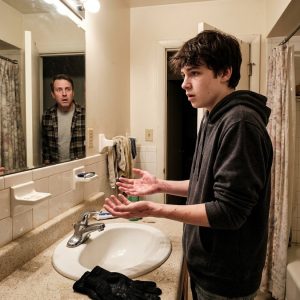
As two people who had just realized the trap around them had more walls than either of them knew.
He showed me documents hidden in a locked drawer behind the wardrobe: trust language, board agreements, old therapy records edited to sound more severe than they were, signatures his mother had pushed him to make after sedatives and surgeries. I showed him the contract Mrs. Hamilton’s lawyer had sent my family attorney: the villa clause, the loyalty clause, the confidentiality language, the penalties if I left within five years.
Buried in the back was the real heart of it.
If I bore a child, any residence transferred to me could be absorbed into a custodial family trust “for protection of legacy interests.” In plain English: the baby would become the hook, and the house would never truly be mine.
By sunrise, fear had changed shape.
It was no longer fear of Liam.
It was fear of what would happen if we did nothing.
So we made a plan.
It began with patience.
That part nearly killed me.
For three weeks, I played the grateful new wife. I learned the rhythms of the house in a different way now—not as a maid moving invisibly through rooms, but as a woman every servant was expected to watch. Mrs. Hamilton started sending fertility tonics to our breakfast table “for strength.” She asked questions with surgical sweetness. Was Liam sleeping better? Was I comfortable? Did we “feel hopeful about the future”?
Liam remained in the wheelchair in public.
But not in private.
At night we walked the closed east corridor together, the one no guests used. At first only a few minutes. Then more. He showed me how stiff the scar tissue became in the cold. I showed him the hidden pantry ledgers where household purchases revealed which staff members could be trusted by what they smuggled in and what they quietly refused to report.
We were looking for cracks.
We found them.
The Hamiltons’ longtime groundskeeper, Mr. Velez, had been there the night of the fire. He knew Liam had started recovering years earlier because he once saw him walking in the greenhouse after midnight. He had kept quiet because Mrs. Hamilton paid for his grandson’s medical treatment.
The family driver knew when the wheelchair was for appearance and when it wasn’t. So did one physical therapist dismissed after refusing to falsify a progress report. So did the family’s old estate attorney, Margaret Bell, who had resigned two years earlier after what she later called “a progressive loss of moral oxygen.”
Liam contacted her first.
Not by phone.
In person.
Standing.
That mattered.
Margaret Bell stared at him for a full ten seconds before she started crying. Then she said the sentence that finally made me believe we might actually get out.
“I was wondering how long she’d keep you buried.”
The legal avalanche started quietly.
Margaret Bell still had copies of pre-amendment trust drafts—versions from before Mrs. Hamilton inserted fertility-linked property controls and medical oversight provisions. The dismissed therapist signed a sworn affidavit. Mr. Velez provided dated security stills showing Liam walking across the back courtyard eighteen months earlier. A second staff member supplied internal emails scheduling “wheelchair visibility” for donor events.
Once enough of it existed outside the house, the lie became unstable.