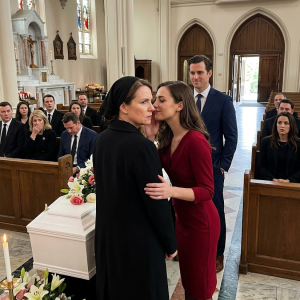
Clara felt every eye in attendance sting with tears.
In the years that followed, people in Saint Jude stopped calling her the girl who had been traded and stopped calling him only the deaf man.
Clara became known for running the ranch books better than any clerk in town.
Elias built furniture in the barn during winters when the ground was too hard for planting, and his tables sold well enough to buy more land.
He never heard the world as other men did, but he heard enough.
He heard her laughter from the porch.
He heard the rooster at dawn.
He heard, on good days, the creek behind the pines after rain.
Most of all, he heard the life that had once been denied to both of them.
Long after the gossip died, people still remembered the strange winter marriage that began in humiliation and turned into something no one had expected.
But Clara remembered it differently.
She remembered the lamp glow, the shaking tweezers, the monstrous clump pulled from Elias’s ear, and the instant a terrible mystery finally gave up its hold.
That was the night the pain began to loosen.
That was the night fear stopped being the truest thing in the room.
And when Clara looked back on the day she became a bride, she no longer thought of herself as the girl sold for fifty dollars.
She thought of herself as the woman who found the hidden rot, dragged it into the light, and built a real marriage only after the lie had been torn away.