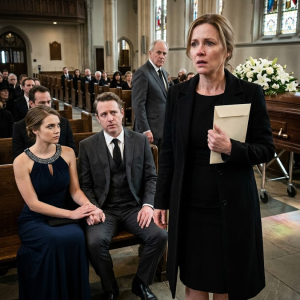
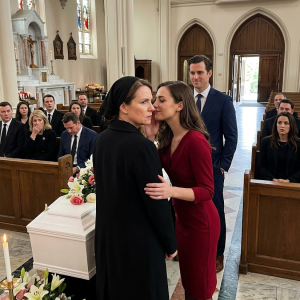
He had learned how to cut mold off bread without letting her see.
He had learned that toddlers did not understand why there was no more apple juice, only that there had been some yesterday and none today.
What he had not learned was how to stop missing Sarah in a hundred little ways every day.
He missed her voice from the kitchen.
He missed the way she tucked Lucy’s curls behind her ears.
He missed the fact that when he was afraid, there used to be someone else in the room who knew it too.
Before the illness, life had been narrow but steady.
Evan worked as a freight coordinator for a regional shipping company.
Long hours, decent pay, predictable routines.
Sarah worked as a medical assistant at a downtown clinic.
She was organized, funny in a dry, quiet way, and the sort of person strangers trusted quickly.
Then came the headaches, the scans, the diagnosis.
A form of cancer aggressive enough to make every future conversation sound like a prayer spoken too late.
At first they believed in treatment plans.
Then they believed in second opinions.
After that, they believed only in making it to the next appointment.
Evan quit his job when Sarah could no longer stand without help.
The bills piled up in crooked stacks beside the toaster.
Insurance covered some medications and denied others.
They sold his motorcycle first, then Sarah’s jewelry except for the cheap silver bracelet Lucy liked to play with.
When the landlord agreed to wait one extra month, Evan cried in the hallway after the call ended.
Sarah knew every number even when Evan tried to hide them.
She knew when the checking account dipped below rent.
She knew when the utilities were late.
She knew, too, that he would spend every remaining dollar and every borrowed one to keep her alive one more week if he could.
Maybe that was why she waited until the end to mention the card.
He had been sitting beside the bed in the half-light of a Tuesday morning.
Lucy was asleep in the next room.
Sarah’s breath had gone thin and uneven.
She squeezed his fingers with surprising strength, opened her eyes, and whispered, “Keep the card.
Don’t lose it.
Promise me.”
He promised because he would have promised anything.
After the funeral, he found the card in her jewelry box inside a small envelope with his name on the front.
There was no note.
No explanation.
Just the card.
He kept it in his wallet because it had been Sarah’s last clear instruction.
For weeks he did nothing with it.
It seemed impossible that a woman who had died under the weight of medical debt had secretly hidden meaningful money.
Then the eviction notice arrived.
Five days.
Pay in full or vacate.
That night, Evan emptied his wallet onto the kitchen table: three hundred sixty-two dollars, a grocery receipt, a photo strip from an old county fair, and the card.
He stared at it until nearly dawn.
The next morning he dressed Lucy in the cleanest clothes he could find, took the bus downtown, and walked into Grand Crest Bank because he had run out of better ideas.
Now, seated in private services under the judgment of strangers, he wondered if this had