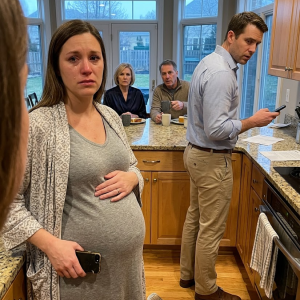
it was a familiar family performance.
They tried warmth first, then guilt, then irritation.
But underneath it, something felt wrong.
The numbers on the printed estimate were aggressive.
The expected monthly payment was far higher than either of them had ever responsibly handled.
Their claimed reserves were thin.
When I asked direct questions, Marcus responded with vague statements about cash flow and how lenders never understood self-employed people.
Nadia kept changing the subject.
Finally I said, very clearly, that I was not cosigning anything.
That was when Nadia let slip that they had already put down earnest money on the house.
Everything sharpened after that.
I understood in one sickening instant that they had not invited me into a dream.
They had built a plan around me without my consent, and now that plan was wobbling.
Marcus set down his glass and looked at me like I had just broken some unspoken contract.
Nadia called me selfish.
I left before the argument got uglier, but the ugliness followed me home through text messages and missed calls.
For the next few days my phone lit up with alternating pressure and pity.
You’re overreacting.
We’d do this for you.
Do you know how humiliating this is? I ignored most of it.
Then my credit monitoring app sent me an alert while I was at work.
Hard inquiry.
Mortgage lender.
I stepped into the office stairwell and called the number in the notification.
The woman in the lender’s fraud department asked me to verify my identity and then confirmed there was an application in process connected to my Social Security number and a property address I had never heard before.
I remember gripping the railing so hard my hand cramped.
The application included my salary, my employer, and a co-borrower structure involving Nadia and Marcus.
A fake email address had been created using my name.
A phone number I did not recognize had been listed for me.
The file was active enough that it had generated an inquiry on my report.
I told the woman, as calmly as I could, that I had not authorized anything.
She transferred the case to internal fraud, flagged the application, and advised me to freeze my credit immediately.
When I called Nadia, she tried denial first.
Then minimization.
Then indignation.
According to her, they had only used my information to see if I would qualify.
According to her, nothing real had happened yet.
According to her, I was turning a family misunderstanding into some kind of crime.
Then Marcus got on the phone.
His voice had none of the fake charm from dinner.
It was flat and threatening in a way that made my skin go cold.
He told me I was making a mistake.
He told me not to blow up their future over paperwork.
He told me to calm down.
I hung up on him, froze my credit, placed a fraud alert, and texted Nadia one sentence: Do not ever use my information again.
That should have been the end of my contact with them.
Instead, it was the point where their panic turned dangerous.
That night Nadia called me crying.
Real tears, or at least a very good imitation of them.
She said Marcus was furious, the lender was asking questions, and she needed