only confuses him. Your job is to keep the house in order, not play specialist.’ Then she added, almost kindly, ‘The women who last here understand boundaries.’
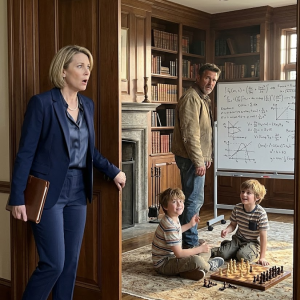
Hannah let the conversation end, but she began watching more closely. She noticed that Leo’s right ear was often red by evening. She noticed him shrinking back whenever Celia handled his medicine schedule. She noticed entries in the daily care binder that felt strangely repetitive, as if they had been copied from old language rather than written from real observation: noncompliant, disruptive, dysregulated, difficult after auditory cues. The phrase auditory cues stopped her cold. Why would that phrase appear so often for a boy who was supposedly unable to hear anything at all?
She tried Alejandro next. She caught him one morning at the long breakfast table, reading market updates on a tablet while barely touching his coffee. She chose her words carefully. She told him she believed Leo might have partial hearing and an untreated ear problem. Alejandro’s expression tightened almost at once, not with anger at first but with exhaustion. ‘Dr. Reed has overseen my son’s care since birth,’ he said. ‘We have consulted specialists. We have spent years on this. I am not going to let a housekeeper destabilize him with theories.’ It was the sort of polished, controlled response a man gave when he believed he was ending an inconvenience. Hannah almost backed down. Then she looked toward the doorway and saw Leo standing there, watching his father’s mouth, hearing enough to know he was being dismissed again.
Everything changed that night.
The house had gone quiet after dinner. Rain tapped the windows. Most of the downstairs staff had finished their work. Hannah was folding towels in the laundry room when Leo appeared barefoot in the doorway, his pajama sleeve damp where he had evidently wiped his face. He did not speak. He crossed the room quickly, grabbed Hannah’s wrist, and pressed her hand hard against his right ear. The skin was hot. He winced. Then he turned and pointed toward the hallway cabinet where Celia kept medication.
Hannah followed him. The cabinet was locked, but the key had been left on the service tray after dinner. Inside were neatly labeled containers, bandages, and a small amber bottle with a pharmacy sticker that had been peeled away. When Hannah unscrewed the cap, the smell was sharp and wrong—far too harsh for a child’s regular ear treatment. Leo recoiled the second the bottle opened. On instinct, Hannah put it back and locked the cabinet. Then she led him upstairs to the abandoned nursery suite Sofia had once used as a quiet sitting room.
She did not know exactly what she was looking for until she saw Leo tug at the bottom drawer of an ivory dresser. Hidden beneath folded baby blankets lay an envelope, yellowed slightly at the edges, with Alejandro’s name written in Sofia’s handwriting. Under it sat copies of early pediatric notes. Hannah read standing there in the dim lamplight while Leo clung to her sleeve. The newborn hearing screen had been inconclusive, not definitive. A six-month pediatric ENT consultation had been recommended because of persistent fluid and pressure. A second audiology exam at eight months had documented measurable response in the right ear. Surgery had been discussed.