eyes were sharp.
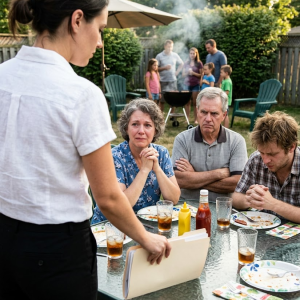
She explained in a careful, embarrassed rhythm that kidney failure had made it hard to work, hard to travel, hard to do almost anything without planning around appointments and costs.
Their son Tomás had asthma.
Their daughter Lucía had started helping more than any child should.
The baby, Amelia, was their niece.
Carlos’s younger sister Maribel had died seven months earlier after bouncing between temporary rooms during the first wave of relocations near the redevelopment zone.
She had gotten sick, delayed treatment to keep working, and never fully came back from the pneumonia that followed.
Carlos and Elena had taken Amelia in the same week the notices reached Los Naranjos.
Family emergency, Carlos said, was the shortest way to explain a life that was breaking in several places at once.
One absence had been for Elena’s collapse after dialysis.
One had been when Tomás spent a night in the emergency room because the damp room they had been offered during relocation negotiations triggered his breathing.
The third had been the day Maribel’s legal paperwork was finalized so Amelia would not be sent elsewhere.
He had asked HR about emergency leave.
He had asked a site supervisor whether employees living in the project zone qualified for relocation assistance.
He had filed concerns through the compliance hotline when acquisition agents started pressuring elderly neighbors to sign papers they did not understand.
No one had answered him except to remind him that missed shifts could lead to termination.
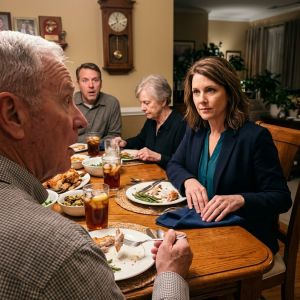
Laura listened without interrupting.
That, more than anything, made Lucía watch her differently.
Carlos pulled more documents from the folder and laid them on the table one by one.
There were copies of checks issued for amounts residents said they never received.
There were inspection reports that did not match the actual conditions of the buildings.
There were messages from a senior acquisitions office telling field teams to accelerate departures before a public hearing.
There were approvals carrying Laura’s name on days she had never seen the files.
But the most devastating paper in the stack was not forged.
It was a performance memo circulated by executive management months earlier, under a philosophy Laura herself had proudly championed: no delays, no exceptions, no emotional decision-making.
She left the house just before dark, but she did not leave unchanged.
Back in her penthouse, all the glass she had once loved began to feel accusatory.
The city reflected in her windows like a diagram of choices she could no longer pretend were neutral.
She pulled up her travel calendar, board minutes, and project authorizations.
The forged timestamps were undeniable.
Yet the fraud alone did not absolve her.
Arturo Herrera, her chief operating officer, had run acquisitions like a military campaign because she had rewarded numbers above everything else.
Marcela Vega in HR had tightened leave rules because Laura had praised efficiency.
Sandra Cifuentes in legal had learned how far to push because Laura rarely asked how a result had been achieved if the result pleased the market.
The next morning she called Patricia into her office before sunrise.
Patricia arrived looking as if she had barely slept, which turned out to be true.
She had known Los Naranjos was controversial but not how far the rot went.
Together they pulled the restricted project files,