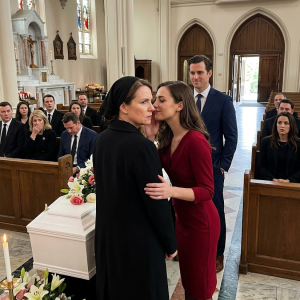
beside me at the final hearing.
When the judge signed the decree, I expected to feel triumphant.
Instead I felt light, disoriented, and tired clear through to the bone.
Freedom, I learned, is not always fireworks.
Sometimes it is simply the absence of dread.
Three months later, I moved into a one-bedroom apartment with uneven floors, thin walls, and a kitchen so small I could touch both counters without taking a step.
It was perfect.
The first night there, I stood in front of the stove and cried because I had left a spoon in the sink and nothing bad happened.
Nobody inspected the towels.
Nobody commented on how loudly I closed a cabinet.
Nobody tasted the food like a judge preparing a sentence.
A few weeks after that, I went back to the hospital.
I brought a thank-you card and a paper bag with lemon cookies from the bakery across the street.
I did not know whether Talia would remember me.
Emergency nurses see pain in endless rotation.
But when she stepped into the waiting area and saw me standing there without a bandage, without Marcus, wearing a cheap green sweater and the first truly relaxed smile I had shown in years, she recognized me immediately.
I thanked her for the card.
She shook her head and said, ‘The card didn’t save you.
You saved you.
The card just held the door open.’
I have thought about that sentence many times since.
There are still echoes.
I still tense sometimes when I hear a car door slam outside.
I still double-check locks at night.
Healing is not neat.
It does not move in a straight line.
But shame no longer lives in my house.
Last winter, Rachel came over for dinner and brought a bottle of wine and a loaf of bread she forgot in the car until halfway through the meal.
I made mashed potatoes and oversalted them by accident.
We looked at each other.
Then we started laughing so hard I had to sit down.
I ate every bite anyway.
After Rachel left, I washed the dishes, turned off the kitchen light, and stood for a moment in the quiet.
On the counter sat a glass salt cellar catching the glow from the streetlamp outside.
It was such an ordinary object.
That was the miracle of it.
For years, salt had been a weapon in someone else’s hand.
Now it was just salt.
Marcus was gone.
The court order was in the drawer by the fridge.
My name was still Elizabeth Valencia, but the woman who apologized for being hurt no longer lived there.
And when I finally went to bed that night, the apartment was silent in the best way possible: not with fear, not with waiting, but with peace.