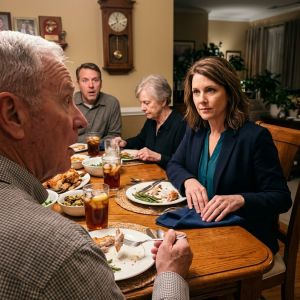
been silent until then, set down her teacup with a precise little click.
You brought papers to my hospital bed, she said to my father.
You looked me in the eye and told me I was signing insurance forms.
Don’t you dare sit in my house and act confused now.
Nobody spoke after that.
Miriam took over.
She explained that Grandma had established a protected living trust with independent counsel.
The house was now secured against any interference from my parents, Vivien, or Marcus.
I would serve as trustee for administration purposes only, under Grandma’s instruction.
Funds for her care had already been allocated.
Additional contact about loans, transfers, or money requests would go through counsel.
Then my mother asked the question that told me everything I needed to know.
So what happens to the rest of the money?
Not to you, I said.
She started crying for real then.
Vivien turned on Marcus with a speed that would have impressed me if it weren’t so predictable.
She demanded to know whether there was another woman.
Apparently she had found messages on the cruise after the legal notice came through.
Marcus tried to deny it, but denial collapses quickly when nobody wants to help you maintain it.
The meeting ended badly for them and quietly for me.
Two detectives arrived the following week to take full statements.
The bank’s fraud department cooperated.
Marcus’s phone records and financial trail told a clearer story than any family argument ever could.
He had been juggling debt, lying about the so-called promotion, and using borrowed money to maintain an image he couldn’t afford.
The affair was real.
The plan to let Grandma’s house absorb the damage was real too.
He was charged three months later.
My father was not charged criminally, but only because he cooperated, admitted he had misrepresented the documents to his mother, and entered into a civil agreement that left him paying legal fees he had not expected.
My mother discovered that guilt becomes much heavier when it comes with bills.
Vivien filed for divorce before the first hearing on Marcus’s case.
As for me, the part people imagine as the happy ending was the least dramatic piece.
I did not buy a yacht.
I did not move into a glass mansion.
I did not start dressing like money had changed my bloodstream.
I paid every tax bill.
I built a conservative investment plan.
I bought a modest house with a greenhouse on the property and enough land to breathe.
I expanded my landscaping company into a design firm with a native-plant nursery and a training program for women re-entering the workforce after divorce, caregiving, or financial hardship.
It turns out that when you’ve been treated like background noise, one of the greatest luxuries is creating work that lets other people be seen.
Grandma moved back into her house in the spring.
Not alone.
We renovated the downstairs so she could live safely there with a live-in caregiver three days a week and help from me the rest.
We repainted the porch swing.
We restored the kitchen cabinets she loved.
We planted climbing roses along the back fence and a row of lavender beside the walkway because she said every home deserved something that smelled like peace.
My parents kept trying