When she walked in, my first irrational thought was that Lily had her eyes.
Not exactly the color.
The way they searched a room before settling.
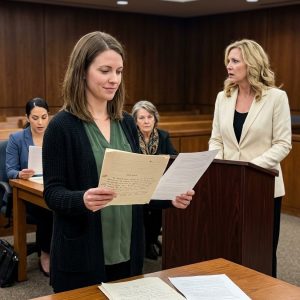
Tessa looked at me, then at the folder in my hands, then down at the table.
“I did not abandon her,” she said before anyone else spoke.
The sentence came out so quickly, so practiced, that I knew she had been saying some version of it to indifferent people for years.
“I know,” I said.
And then she cried.
Not loudly.
Not theatrically.
Just one hand over her mouth, shoulders folding inward as if her own body did not trust hope enough to stand upright around it.
The story, once laid out with corrected records, witness notes, and timelines, was devastating in its ordinariness.
At seventeen, Tessa had signed a temporary medical consent form while medicated and frightened. It was later used to imply broader surrender. County workers rotated. Files crossed. Owen inserted affidavits. By the time she secured legal aid, the infant had already been moved into a “stabilized kinship-preferential placement pathway,” which was fancy language for a mess no one wanted to unwind because too many professionals had signed too many wrong things.
She fought.
Then she lost.
Then every year got harder to reverse.
She never stopped asking.
She simply ran out of money faster than the system ran out of excuses.
“What do you want now?” I asked her, because anything less direct would have been cruel.
She answered without hesitation.
“I want her to know I looked for her.”
Not the trust.
Not revenge.
Not my house.
That one sentence told me more about her than all the files.
Lily learned the truth in stages.
No child should receive a story like that all at once.
The counselor helped. So did Detective Raines, strangely enough, with her clear voice and refusal to dramatize what was already dramatic enough.
We told Lily that the adults around her had lied about how she came into our family.
That Owen had hidden things.
That Ben had tried to use those hidden things for money.
That her birth mother had never stopped trying to find her.
That none of this changed the years we had lived together, the lunches packed, the fevers survived, the homework battles, the silly songs in the car, the fact that I was her mother in every way daily life teaches that word.
She listened with the stillness of a child trying to decide whether the earth itself is reliable.
Then she asked the question I had been fearing.
“So was my whole life fake?”
I took her face in my hands and said, “No. Some people lied around your life. That’s different.”
She cried for Owen in a strange, confused way.
She hated Ben cleanly.
She asked to see Tessa after two weeks.
The first visit was short.
Awkward.
Tender in a bruised way.
Tessa brought a small paper envelope of hospital bracelets, photocopied petitions, and one faded picture of herself pregnant at seventeen with a stubborn, frightened look on her face.
Lily studied it for a long time.
Then she asked, “Did you really keep looking for me?”
Tessa said, “Every year.”
Lily nodded once and said, “Okay.”
It was not forgiveness.
It was an opening.
Sometimes that is bigger.