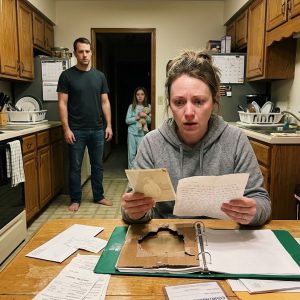
Thomas was removed from partnership consideration immediately.
Then placed on administrative review.
Then quietly encouraged to resign before the inquiry completed in full.
He fought that at first, because men like him always think their polish still counts after the floor gives way.
It didn’t.
By February, he was gone from the firm.
Margaret tried to contain it with a familiar script: misunderstanding, private family stress, malicious exaggeration. But rich social circles don’t truly care about morality. They care about contamination. And once the story became one of a pregnant daughter-in-law being worked like staff at Christmas dinner while guests watched and a judicial conflict review followed, Margaret’s invitations thinned with remarkable speed.
The first real casualty of her behavior was not legal.
It was social exile.
Which, for her, may have felt worse.
As for me, I did not go into full labor that night.
The medication worked. The contractions stopped. My blood pressure stabilized. I was ordered onto modified bed rest for the remainder of the pregnancy and forbidden, in language so stern even I obeyed it, from cooking holiday meals for anyone ever again unless that anyone was prepared to worship me while I stirred gravy.
My father brought me home himself.
Not to Thomas’s house.
To his.
The same old brick house where I grew up, where the books were arranged by subject, not color, and the guest blankets always smelled faintly of cedar. He moved my things into the downstairs room, hired a private nurse for check-ins, and installed enough groceries to feed a minor military outpost.
He never once said I told you so.
That, more than anything, made me love him harder.
Thomas called. Texted. Emailed. Wrote one long letter in a tone of practiced humility that still somehow centered his career loss and humiliation more than my body or our child. I read it once. Then I handed it to my attorney.
By New Year’s, I had filed for divorce.
Margaret came to the house once.
She stood on my father’s porch in a camel coat with the expression of a woman who had never in her life expected a door to remain only partly open to her. My father stepped outside and closed it behind him.
I watched from the downstairs window.
I never heard every word, but I heard enough.
At one point she raised her voice and said, “This is a family matter.”
My father answered, calm as winter, “Not anymore.”
She left in tears.
Not because she was sorry.
Because she had finally met a room she could not arrange.
My son was born six weeks later on a cold February afternoon.
Healthy. loud. perfect.
When they placed him in my arms, pink-faced and furious and blinking at the world as if he had already found it unsatisfactory, I cried so hard the nurse laughed and cried with me.
My father stood beside the bed, one hand over his mouth.
“What’s his name?” he asked.
I looked down at the tiny, wrinkled miracle who had arrived after so much noise and cruelty and fear.
“James,” I said.
My father nodded once, eyes shining. “Good. Strong name.”
Thomas asked to be informed when the baby was born. I allowed the hospital to tell him only that his son had arrived safely and that all visitation would be arranged through counsel.