at the page again.
Harrington Community Nutrition Initiative.
It was one of the programs his foundation had launched after the infant formula shortages the year before, a fund intended to subsidize clinic deliveries, food packages, and emergency formula vouchers for mothers in boroughs the city kept forgetting.
The quarterly numbers in front of him were wrong.
Not slightly wrong.
Deliberately wrong.
He asked if she had original copies.
Marlene hesitated, then laughed without humor.
She had learned the cost of trusting official channels.
She told him about her supervisor refusing to answer questions, about HR confiscating her laptop, about how she had printed the strangest transfers before asking for help because something in her told her no one would protect her once she spoke.
She had hidden the flash drive because she was afraid of being blamed for theft, afraid of lawyers, afraid of losing what little she still had left.
Then she looked at Juniper, asleep against her chest with a full belly for the first time that night, and slid the drive across the counter.
Miles did not promise miracles.
He asked if he could make copies, have his counsel verify the documents, and send a pediatric nurse in the morning just to be sure the baby was all right.
Marlene almost refused out of reflex.
Pride had carried her through humiliation until pride started to look a lot like hunger.
In the end she gave him permission for one night and said she could change her mind in the morning.
He nodded as if that mattered, because to him it did.
Before he left, he wrote down a private number for his chief of staff, Celia Moreno, and said if anyone from her old company contacted her before daylight, she should call immediately.
At 8:15 the next morning, there was another knock.
Marlene opened the door expecting a mistake and found three people in the hall: Celia with coffees and legal folders, a pediatric nurse with a diaper bag slung over her shoulder, and Ruth Calder, silver-haired and breathless, already crying.
Celia had traced Harbor Light Haven from the name in Marlene’s text and reached Ruth before dawn.
The moment Ruth wrapped her arms around Marlene, the last of the previous night’s terror broke apart.
For the first time in months, Marlene was not trying to stand upright alone.
They moved quickly after that.
The nurse checked Juniper and confirmed what Marlene already suspected: the baby was tired and underfed from one bad stretch, but stable.
Celia arranged three weeks in a furnished apartment owned by a women-and-children housing nonprofit that the Harrington foundation already funded.
It was not charity, she said.
It was emergency witness protection until they understood whether Barton Ledger would try to intimidate Marlene or tamper with evidence.
By noon, Marlene and Juniper were out of the studio with two suitcases, the flash drive, and the yellow-star blanket Miles had bought because he remembered what cold apartments felt like.
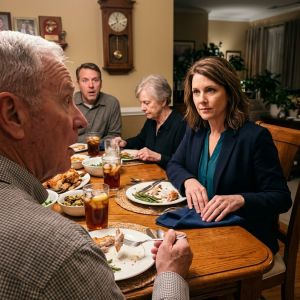
The first meeting took place that afternoon in a quiet conference room downtown.
Marlene wore the only blazer she still had pressed.
Miles sat across from her with Celia, an outside employment lawyer named Rachel Singh, and two forensic accountants.
No one interrupted while Marlene walked them through the ledgers.
Once she started, the