settlements, with additional restitution pending.
Barton Ledger dissolved under court supervision.
Marlene received back pay, damages for retaliation, and a substantial whistleblower award that finally gave her what stability had always required: margin.
She paid off Juniper’s medical debt first.
Then she started a college fund.
Then she sat in her parked car outside Harbor Light Haven and cried for ten full minutes because she had money in the bank and no one could fire her for telling the truth.
Miles did something quieter and, to Marlene, almost more important.
He funded a permanent formula and diaper pantry at Harbor Light Haven in his mother’s name, with a satellite emergency locker at a Bronx clinic that had once lost its supply budget to the fraud.
He insisted the intake rules stay simple.
No one begging for help at eleven-thirty at night should have to fill out a humiliating stack of paperwork first.
Ruth cried when the first shipments arrived.
Marlene laughed and told her she was legally required to cry because she had built the place on stubborn compassion and therefore deserved one dramatic victory.
By the time December returned, Juniper was walking in reckless, delighted bursts from couch to coffee table and back again.
Marlene had moved into a modest two-bedroom apartment with steady heat, solid windows, and a kitchen light that never flickered.
She kept one of the old empty formula tins on a high shelf, not as a wound but as evidence.
Some nights, when work was hard and fear tried to convince her that security was temporary, she looked at that tin and remembered exactly how far the distance was between then and now.
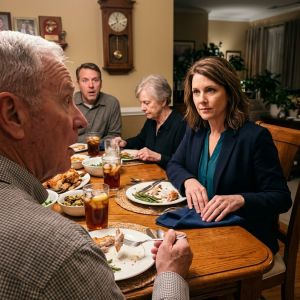
On New Year’s Eve, one year after the mistaken text, the apartment smelled like rosemary chicken and fresh bread.
Ruth was setting plates on the table.
Juniper, in star-print pajamas, kept trying to feed a stuffed giraffe green beans.
Outside the windows, the city was already flaring with early fireworks.
Marlene caught her reflection in the glass and almost failed to recognize the woman looking back.
She still had the same face, the same careful eyes.
But desperation no longer sat inside them like a permanent tenant.
At 11:42 p.m., there was a knock at the door.
Not a frightening knock.
Not a desperate one.
Just three familiar taps.
Miles stood in the hallway holding a bakery box and a paper crown Juniper had apparently insisted, through Celia, that he wear when he arrived.
He had skipped another gala.
His coat was flecked with cold rain, and there was a softness in his expression that had not existed the night Marlene first saw him beneath the broken hall light on Sedgwick Avenue.
“You’re late,” Ruth told him, though he wasn’t.
“Traffic,” he said, deadpan.
“On a private driver route across Manhattan?” she asked.
He handed her the bakery box in surrender and stepped inside.
They ate, laughed, and listened to Juniper clap at the fireworks long before midnight officially struck.
After Ruth took Juniper to settle her in bed, Marlene found Miles by the window, looking out across the river toward the glittering skyline that once felt like a separate species of planet.
He said the city looked different now.
She asked whether that was because of the scandal, the new audit