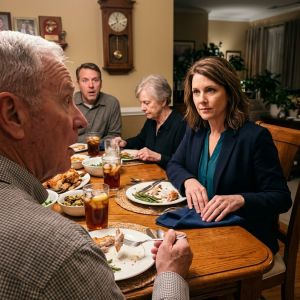
lights strung between the barn and the porch. Children ran through the grass. Laughter drifted across the field. Tessa, now married and working as a veterinary tech in Miles City, brought a peach cobbler. Milo sat at the head of one table pretending not to be emotional about any of it.
That afternoon, while searching a cedar chest for extra tablecloths, Ren found one last envelope she had somehow never opened. It had slipped behind a drawer years earlier. On the front, in Emiline’s hand, was a note that simply said: For the day the house feels full. Ren took it to the porch and opened it alone. Inside was a card that read: Home is not the place where pain failed to reach you. Home is the place where you decide pain stops. If this house is full when you read this, then you have done more than come back. You have finished the work.
Ren sat on the porch steps and cried harder than she had cried when she found the first cards. Not because she was sad, though she was sad for all the lost years. She cried because the sentence was true. The line of hurt that had run from pride to distance to death to foster care had ended there, on that land, because she had ended it. She had taken a ruined farmhouse and made it answer a different question. Not who belongs here, but who needs to.
When the sun dropped low and the supper lights came on, Ren framed that final card and hung it in the front hall beneath the old photograph of Mara in front of the farmhouse. The silver ring stayed on her hand. The house filled with voices. Someone called from the kitchen that the coffee was ready. Someone else shouted for extra chairs. Ren stood in the doorway for a moment and looked at the walls, the worn floorboards, the people moving through rooms that had once felt close to collapse. Then she went inside.
She never sold the land. At thirty-one, she paid off the last renovation loan. The sign at the road still reads Holloway House. Travelers sometimes stop and ask how a young woman managed to build all of it from almost nothing. Ren tells them the truth. It started with seven dollars, a hidden room beneath a barn, and a grandmother who refused to let love expire just because distance and bureaucracy said it should. Then she usually glances back toward the porch, where someone is almost always laughing, and knows with complete certainty that after a lifetime of being moved along, she finally found a place that kept her.