‘I wasn’t.
I loved you both, but love without courage becomes selfishness.
That is what I became.’
He looked at Lourdes with eyes already fading.
‘I don’t deserve forgiveness.’
She answered truthfully.
‘No.
You don’t.’
He nodded, as if he had expected nothing else.
After a long silence, Lourdes spoke again.
‘But I will not spend what remains of my life chained to what you did.
I lost too much already.’
It was not forgiveness.
It was something narrower and more useful: refusal to carry his sin any farther than necessary.
Ramon died two mornings later in a government hospital with Tala on one side of the bed and Lourdes on the other.
Not because he had earned that mercy, but because Tala deserved not to face another disappearance alone.
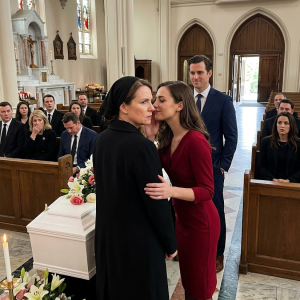
The funeral was small.
Rain drummed softly over the chapel roof.
A few neighbors came.
One old coworker.
A priest who did not know the story, only that a man had died and two women stood beside the coffin in silence that felt heavier than mourning.
Tala cried at the burial, and Lourdes let her.
The dead do not become innocent because they are dead, but grief does not ask permission to be morally tidy.
Tala was losing a father at the same moment she was learning what kind of father he had been.
That is a brutal thing for any heart to hold.
When the last prayer ended, Lourdes did not look at the grave for long.
She had already spent fifteen years grieving a man who was not there.
She would not donate any more life to his shadow.
She brought Tala home to Quezon City a week later.
The drive from the terminal felt strangely ordinary.
Vendors called out near intersections.
Jeepneys rattled past.
Laundry fluttered from balconies.
Lourdes kept glancing at the seat beside her as if Tala might disappear again if not watched carefully enough.
At the house, Tala stopped in the doorway of the room that had been preserved for her and did not speak for a full minute.
The doll still sat on the shelf.
The dresses still hung in the closet.
The bedspread had been changed and washed and changed again over the years, but it had always been chosen in the same color.
Nothing accused.
Everything waited.
‘You kept it all,’ Tala whispered.
Lourdes nodded.
‘I didn’t know what else to do with love that had nowhere to go.’
Tala cried again then, but this time the crying was quieter.
Not the violence of discovery.
The ache of being believed back into existence.
Healing did not happen in one scene.
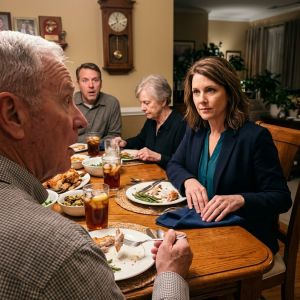
It happened in breakfasts.
In long afternoons sorting photographs.
In hesitant questions asked from doorways.
In Lourdes learning that Tala liked coffee too sweet and hated thunder and could not sleep without a light in the hallway.
In Tala learning that Lourdes still folded clothes the same way and hummed while grading papers and touched the edge of her plate when she was anxious.
Some days were easy.
Some were not.
There were days Tala became cold and withdrawn after remembering another lie Ramon had told.
Days she felt guilty for loving the father who had wronged them both.
Days Lourdes had to leave the room because anger rose so suddenly