father’s jaw hardened. Sarah whispered my name, but I kept going.
“On the night of my graduation, I overheard my father describe me as ‘the ugly graduate’ because he believed I would damage the family’s image. The next day, when I told my parents what I’d heard, they didn’t apologize. They told me I didn’t fit their plans. Within a month, I had been removed from the family will. There were no calls. No visits. No birthdays. No concern. Just silence.”
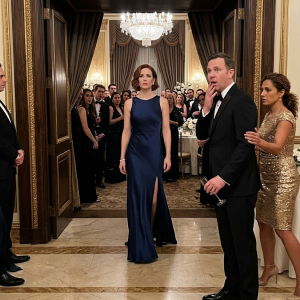
The room had gone so quiet I could hear the air-conditioning humming in the ceiling.
I looked at Sarah, then at Michael, then finally at Eduardo.
“I’m not saying this to ruin a wedding,” I said. “I’m saying it because some lies become very expensive when too many elegant people are asked to believe them. I was not invited here because I was missed. I was invited because my company became useful. Because suddenly the daughter who embarrassed this family could help impress the right people.”
My father stepped forward. “Lucy, that’s enough.”
I turned toward him without lowering the microphone.
“No,” I said calmly. “Enough was ten years ago. This is just the part where the room catches up.”
A few guests looked down. Others stared at my parents with a kind of fascinated discomfort usually reserved for scandals involving people who had always seemed polished from a distance.
I took one breath and said the last part the way I had practiced it in my car before walking inside.
“I built my life without their approval, without their money, and without the inheritance they thought would matter more than dignity. So tonight I am giving back the only thing they ever really offered me: conditions. There will be no introductions, no access, and no business discussion through me. My work stands on merit, and people who erased me do not get to use me now that I am visible.”
Then I softened my voice slightly.
“But I did come here to celebrate one thing. Starting this year, Aurelian Advisory will fund a scholarship for students who have been underestimated, humiliated, or abandoned while trying to build a future. Because being dismissed at seventeen should not decide the rest of a person’s life.”
I lowered the microphone.
For a second, nobody reacted.
Then Eduardo Fuentes began to clap.
Not tentatively. Not politely. Once, twice, steadily, until the sound forced the room to choose a side.
A few guests joined him. Then more. Not everyone, but enough.
Michael turned to Sarah with a look I still remember. It was not rage yet. It was something colder: realization.
“You told me you were an only child,” he said.
Sarah’s lips trembled. “It was complicated.”
“No,” he said. “It was a lie.”
My mother tried to step in. My father reached for Eduardo, already trying to recover the night with explanation, context, anything. Eduardo did not even pretend. He gave my father one sharp look and said, loud enough for the nearest tables to hear, “I don’t do business with people who confuse cruelty with class.”
That ended it.
The reception limped on for another twenty minutes out of sheer logistical momentum, but the illusion was broken. Guests whispered. Some left early. Others stared openly. Sarah cried in the bridal suite,