me to focus on real achievements. After that, I learned the rules. Lyanna was exceptional. I was reliable. My father used that word constantly, always in a tone that pretended it was praise. Reliable meant I would remember the dog’s medicine when Lyanna forgot. Reliable meant I would stay home and clean before guests arrived while they drove her to piano competitions. Reliable meant I was useful in ways that did not threaten anyone else’s spotlight.
The only person who ever seemed to understand the cost of that role was my grandfather.
He never confronted my parents in front of me. He was too deliberate for messy scenes. Instead, he would invite me to the lakehouse on weekends and give me small, precise tasks. Sort these old receipts by year, Julie. Put the dock repairs in one folder and the tax notices in another. Label those photographs before memory gets lazy. Paper remembers, he liked to say. People do not.
At the time, I thought he was teaching me organization.
What he was really teaching me was evidence.
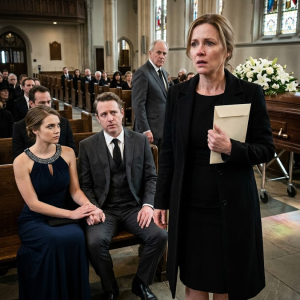
I opened his letter in my car after the will reading. My hands shook so badly that I tore the corner of the envelope.
Julie,
If you are reading this after a public insult, then events have unfolded exactly as I expected. Keep the dollar. It is camouflage. Do not argue with them. Do not explain yourself. Go to the lakehouse tonight. In my study, open the lower cabinet behind the red ledgers. Use the brass key taped beneath this envelope. Read everything before calling anyone. In the top file you will find one name: Samuel Dorsey. Trust him. Trust the documents. And trust what you have known in your bones for years.
Love,
Grandpa.
I read it three times before I started the car.
The drive to the lakehouse took just under ninety minutes. I barely remember the road. I remember the light fading through the trees and the hard shape of the dollar bill in my coat pocket. I remember thinking that grief had begun to split into something else, something jagged and cold. The lakehouse had always been the only place in my life that felt arranged around quiet instead of comparison. My grandfather taught me to fish off that dock, to patch a screen door, to sharpen a kitchen knife properly, to leave a room cleaner than I found it. When I pulled into the gravel drive at dusk, the house stood dark against the water, solemn and waiting.
Inside, it still smelled like him. Cedar, black coffee, wool, old paper, and the faint mineral scent of the lake pressing against the windows.
I went straight to the study.
The brass key was exactly where he said it would be, taped beneath the envelope flap. Behind the row of red ledgers in the lower cabinet was a second lock I had somehow never noticed. When it clicked open, I found six carefully labeled files, three bound notebooks, a long envelope containing a deed, and a sealed packet with my full name written across the front in my grandfather’s narrow handwriting.
The first file changed my life in less than a minute.
It was a guardianship order from twenty-three years earlier. At the top was my name. Beneath it