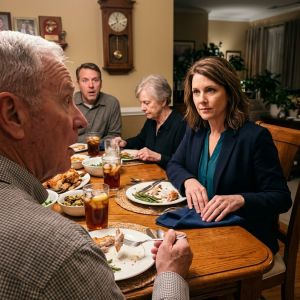
it was needed most.
She glanced at Lily on the word need, and something in me hardened beyond repair.
I asked her whether the week I could not make rent had counted as need.
I asked whether standing on the shoulder of a highway in the rain counted as need.
I asked why being reliable had made me the only person in the family whose fear did not matter.
She said the sentence I think I had been hearing all my life in different clothing.
“You were always the strong one.”
Capable, I learned that night, is the label selfish people put on the person they plan to fail.
I told her strength is not consent.
I told my father that every speech he had given me about discipline now sounded like a man rehearsing excuses over money he had already spent.
Lily was crying too by then, but not like our mother.
Lily looked shocked in a childlike, wrecked way.
She kept turning pages and whispering, “This can’t be right.” When she found the line item for her first New York lease, she went white.
She said she had assumed our parents were paying from savings.
My father snapped that she should stop dramatizing.
Lily put the papers down, looked straight at him, and said, “Don’t use me to hide what you did.”
That did not heal anything between us.
It did, however, stop one wound from deepening.
After dinner, Lily followed me out to my grandfather’s car.
She asked if I believed she knew.
I told her I believed she had never asked because asking would have threatened the version of our family that benefited her.
She cried harder at that than she had at the table.
It was the first honest conversation we had ever had.
Honest did not mean kind.
Honest meant naming that she had enjoyed being chosen and I had survived being overlooked, and both things had shaped us into people who barely knew how to be sisters.
The legal process lasted nine months.
That was shorter than the attorney predicted and longer than my nerves could comfortably hold.
The bank had failed to verify the transfer properly when I turned eighteen and had continued honoring instructions from my father long after his authority should have ended.
Once the forged signature was confirmed, the bank’s tone changed overnight.
Their insurance carrier wanted the matter settled before it became a public lawsuit.
My parents, meanwhile, vacillated between outrage and pleading.
My father sent long emails about loyalty.
My mother left weeping voicemails saying she had made mistakes but did not deserve to lose everything.
Neither of them seemed able to understand that they had already spent years deciding what I was allowed to lose.
Lily did something I did not expect.
She gave my attorney copies of her leases, tuition bills, and transfer receipts.
She moved out of the Manhattan apartment my parents had subsidized and took a much smaller place with two roommates in Queens.
She sold several pieces of jewelry our mother had given her and sent the money directly into the court-monitored restitution account without asking whether I appreciated the gesture.
I did not know what to do with that kind of effort at first.
Resentment had been the language of our