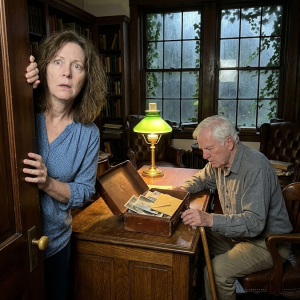
Seven days after I buried my wife, I sat in a polished conference room in Century City and watched my son receive the future he had already started imagining.
Laura Mendes, Jenny’s attorney, slid a velvet box across the table.
Inside were the keys to a penthouse in Los Angeles worth five million dollars.
Marcus stared at them for half a second, then straightened in his chair like someone had just been handed proof that he had always belonged in a better life.
Then Laura turned to me and placed an old iron key on the mahogany table.
“To Samuel Preston,” she read from the will, “the property known as Preston Farm, including the farmhouse, outbuildings, and surrounding acreage.”
Marcus blinked.
“That’s it?”
Laura adjusted her glasses.
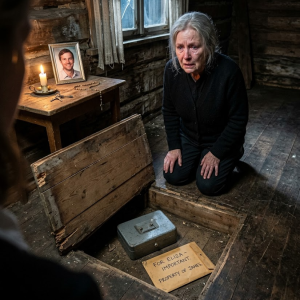
“There is also a sealed letter on the property.
Your wife was very clear that Mr.
Preston was to read it there.”
Marcus gave a dry laugh.
“So I get a penthouse and Dad gets a haunted barn.
Mom never missed a chance to be theatrical.”
I closed my hand around the key.
It was cold, heavy, and much older than the room we were sitting in.
Jenny had chosen it on purpose.
That much I knew.
What I did not know yet was whether she had chosen it for comfort, for punishment, or for protection.
My wife was not a sentimental woman in the casual sense people use that word.
She felt deeply, but she built practically.
She could cry in the car after a meeting and still walk back in five minutes later to close the deal.
She founded her own real-estate development firm in her thirties, survived two crashes in the market, and could negotiate a land purchase with the same calm voice she used to ask whether I wanted tea.
I spent my life teaching history.
I liked lesson plans, chalk dust, marginal notes on papers, and the dependable rhythm of semesters.
Jenny liked site plans, hard hats, county offices, and undeveloped land that made other people nervous.
For forty years we loved each other in those opposite directions and somehow made a straight road out of it.
Then she got sick, and the road narrowed.
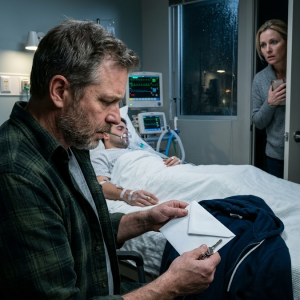
In the last year, she began making short trips she refused to explain in detail.
She asked Laura for old deeds, family records, and survey maps.
More than once I found her at the dining table with reading glasses low on her nose, marking dates on legal pads.
When I asked what she was doing, she would smile, tired but certain, and say, “If anything happens, trust the farm.”
I thought she meant memory.
I thought she meant a place with ghosts in it, the kind of place a widower could sit and talk to the past.
I did not understand that she meant the future.
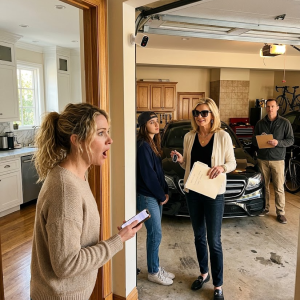
Three days after the will reading, I woke in the penthouse guest room to the scream of power drills.
By the time I made it downstairs, workers were rolling in boxed light fixtures and taping paper over sections of the floor.
A contractor had a laser level out in the foyer.
Marcus stood in the living room with espresso in one hand and a clipboard in the other.
“You didn’t say anyone was coming today,” I said.