The ICU had a coldness that did not feel like air.
It felt arranged, almost deliberate, as if the room had been designed to keep hope from getting too comfortable.
The fluorescent lights hummed above us.
The machines blinked in steady colors.
Tubes ran from bags and monitors into my son’s body, thin lifelines that made him look both protected and trapped.
Noah was twenty-two years old, and he was lying so still that I kept searching his face for the boy he had been.
The boy who used to fall asleep in the back seat with cracker crumbs on his shirt.
The boy who once cried because he thought a bird with a broken wing would be lonely.
The young man who had called me that morning and said, in his careless way, that we should get burgers over the weekend because he had something big to tell me.
He had never gotten the chance.
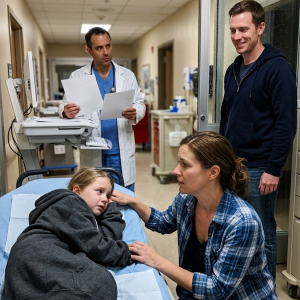
The surgeon stood at the foot of the bed with both hands folded in front of him.
He was young enough to make me angry and calm enough to make me hate him for it.
‘His chances of recovery are minimal,’ he said.
Minimal.
I stared at him as if the word were a thing I could refuse.
My wife, Elise, stood beside me in the coat I had given her two Christmases ago.
Her hands were pressed to her mouth.
Tears ran down her cheeks, but her eyes kept shifting from Noah to the hallway and back again, like there was another emergency happening somewhere else.
‘We are doing everything we can,’ the surgeon said.
I nodded because fathers nod when strangers tell them impossible things.
I nodded because if I opened my mouth, I might make a sound I would never forgive myself for making in front of my son.
When the surgeon left, Elise grabbed my sleeve.
‘I need to call everyone,’ she whispered.
Her voice shook.
It sounded right.
That was the terrible part.
Everything about her sounded like grief.
‘Your sister.
My mother.
My dad.
They need to know.’
At the mention of her father, something small moved through her expression.
It came and went too fast for me to name.
Walter Crane had been part of our marriage from the beginning.
Elise’s father was the kind of man who filled a room before entering it.
He owned a chain of used-car lots across three counties, wore polished boots, and treated silence as something other people owed him.
He loved Noah in the possessive way men like Walter loved things that carried their family name, even though Noah carried mine.
I had never liked him.
But I had never thought he was dangerous.
Elise squeezed my arm, then walked out with her phone already in her hand.
Her heels clicked down the corridor, quick and uneven.
I listened until the sound disappeared beneath the hiss of oxygen and the distant roll of a cart.
Then it was just me and Noah.
I sat beside his bed.
His right hand lay outside the blanket, bruised across the knuckles.
I wanted to take it, but every tube made me afraid to touch him wrong, as if one careless movement from me could loosen whatever held him here.
So I reached for