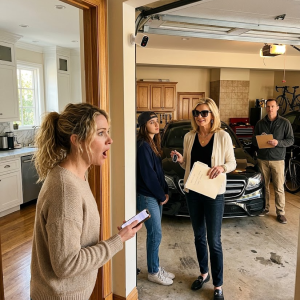
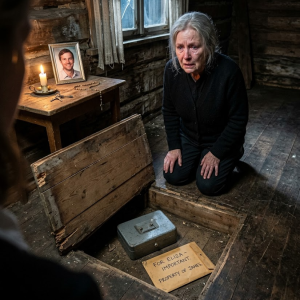
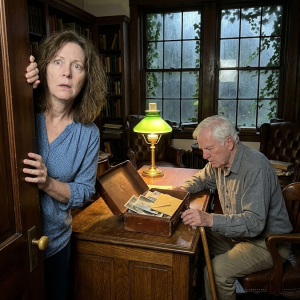
The night her daughter told her to pack a bag, Helen felt something inside her quietly break.
Not loudly.
Not dramatically.
Just a small, final sound in the center of her chest, like a thread pulled too far.
“Only the essentials,” Claire had said.
She stood in the doorway while Helen stared at her, trying to read her face and finding nothing she recognized.
Claire had inherited her father’s eyes, blue and direct, but lately she wore them like closed doors.
“Where are we going?” Helen asked.
Claire’s jaw tightened.
“I’ll explain when we get there.”
That was not an answer.
It was worse than an answer.
Helen nodded anyway because at seventy-two, with hands that trembled more than they used to, and knees that complained on cold mornings, dignity had become a quiet thing.
It lived in what she did not say.
After Claire left the room, Helen opened her closet and stood there longer than she needed to.
Dresses hung in a neat row.
Cardigans.
A coat she had not worn in years because she no longer went many places worth dressing up for.
She folded two blouses, one pair of slacks, a nightgown, underwear, her medicine organizer, and the blue sweater Claire used to steal in college when she was homesick and pretending she wasn’t.
Then she stopped and looked at the framed photograph on her dresser.
Claire was ten in that picture, missing one front tooth, hair escaping a crooked ponytail Helen had failed to make even, holding a crayon drawing with giant red letters: I LOVE YOU, MOM.
Helen picked up the frame and pressed her thumb over Claire’s laughing face.
“I did my best,” she whispered to no one.
Then she wrapped the picture in a scarf and tucked it into the bag.
On the drive, she kept her eyes on the window.
The city rolled by in pieces she knew too well.
The pharmacy on the corner.
The diner where Claire had begged for pancakes after ballet lessons.
The bookstore that used to let children sit on the floor and read for hours.
The avenue lined with larger buildings and private facilities, where polished signs promised comfort, care, dignity, peace.
Helen knew that avenue.
Anyone her age knew that avenue.
Her throat tightened when Claire turned onto it.
Memories arrived without permission.
The day Michael died, Claire had been five years old and standing in the living room with one sock on, asking why everyone was crying and when Daddy was coming home.
Michael had been Helen’s husband for only eight years, but she had loved him with the trusting certainty of a woman who thinks ordinary happiness will last.
It hadn’t.
The funeral flowers had not even wilted when practical people started saying practical things.
Claire could go to an aunt in Ohio.
Or a cousin in Virginia.
Or maybe Michael’s old friend and his wife might be willing, once the paperwork settled.
No one said Helen had to take her.
Claire was not her biological child.
No one said Helen had to stay.
She had been thirty-nine, terrified, grieving, and suddenly alone in a house that sounded wrong without Michael moving through it.
But every time Claire looked at her, Helen felt the answer settle deeper.
She stayed.
At first, staying