The casket was too small.
That was the first thought that landed with enough force to cut through the static in my head as the straps tightened and the cemetery workers began lowering my nine-year-old son into the ground.
Everything about that morning felt wrong.
The gray sky.
The wet edge of my shoes sinking into the cemetery grass.
The polite mechanical hum of the lowering device.
The minister’s voice, gentle and practiced, trying to summarize a child who deserved a lifetime in a few clean sentences.
My hands shook so badly I had to lock them together in front of me just to keep from reaching out, as if I could stop the burial by refusing to let go.
I was standing there alone.
Not completely alone, I learned later to say, because Angela was there.
My elderly neighbor in sensible shoes and a navy raincoat stood a little behind me with a folded umbrella and a face lined by grief that wasn’t even hers to carry.
But none of the people who shared my blood came.
Not my parents.
Not my younger sister Victoria.
Not Melissa, my best friend since third grade.
They had all chosen the same place to be that afternoon, and it wasn’t the cemetery.
Eight months earlier, a hematologist had finally put a name to the thing stealing Caleb from me.
Rare blood disorder.
The doctor said it calmly, maybe because calm was the only way to say something like that and still stay standing.
Caleb sat on the exam table in his Spider-Man sweatshirt, listened without interrupting, and asked the question that made me bite the inside of my cheek until I tasted blood.
‘Will it hurt?’
The doctor had hesitated only a second.
‘Sometimes.’
Caleb nodded.
‘Okay.
Then I need to be brave first so Mom can do it second.’
That was who my son was.
He made rules for courage that included both of us.
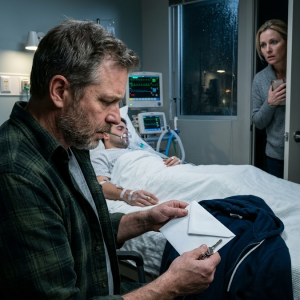
He followed those rules through transfusions, fevers, migraines, bruised veins, appetite loss, and nights when the machines in his hospital room beeped so often I heard them even in my sleep.
He never liked needles, but he never let the nurses see him panic.
He wore superhero pajama pants to chemo because, he said, costumes helped.
When pain bent him double, he whispered, ‘I’m okay, Mom.
Don’t worry.
I’m a Zade.’
His father, Ethan, had set up a college trust long before any of us imagined we would need to think about words like marrow and platelets and survival rates.
Ethan and I were divorced by then, but not at war.
His company had moved him overseas, and the distance turned everyday parenting into calendars, long flights, and video calls scheduled around time zones, but Caleb still lit up when his father appeared on a screen.
Before Ethan left, he sat with me in a lawyer’s office and created an $850,000 trust for Caleb’s future.
If anything happened to Caleb, the remainder would go to me.
‘You’ll know how to honor him,’ Ethan had said.
At the time, I almost laughed at the sentence because it sounded absurd.
We were talking about college dorms and freshman meal plans, not funerals.
Then life turned into hospital corridors and insurance fights and sleeping upright in hard chairs with