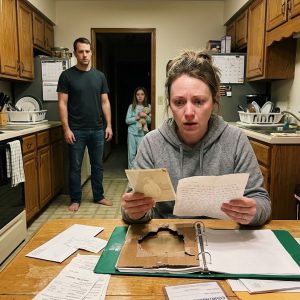
At first she insisted it was stress, that she had been on her feet too long, that a little rest would fix it. But in the small hours of the night, she felt dampness and saw spotting on the sheet. Carlos wanted to take her to the emergency room immediately. Mariana, frightened and exhausted, begged him to wait until dawn and said she could not endure another noisy scene in front of his mother and the remaining relatives downstairs. They argued in whispers until Carlos made a compromise. At first light he would go to the pharmacy, call the neighborhood nurse who sometimes helped families before they reached the clinic, and bring back whatever they needed. Before leaving, he placed a note on the dining table weighed down by the sugar bowl. Let Mariana sleep. She was sick all night. I am getting help. Do not wake her.
Teresa never saw the note. At five in the morning she was already sweeping. By six she was wiping down chairs. By seven she was muttering about grease near the stove and footprints in the hallway. She felt her back pulling like a rope under strain, but she kept moving. Work had always been the answer to everything she did not want to feel. When the house remained silent upstairs, she took that silence as laziness. By ten o’clock, irritation had swollen into fury. She shouted from the foot of the stairs for Mariana to come down and make lunch. She called again, then again. No answer came.
Her knees throbbed too much for repeated trips, so she stood below, one hand on the banister, calling in a voice that grew harsher each time. At last, convinced that the girl was ignoring her on purpose, she grabbed a stick from the kitchen corner, the kind she used to knock dust from rugs, and hauled herself upstairs. The words were already prepared in her mouth before she reached the bedroom door. A decent new bride would not lie in bed until noon. A woman who entered this house would respect its rules. She pushed the door open, marched to the bedside, and jerked back the blanket.
Everything inside her went cold.
The white sheet was marked by a wide dark stain. Mariana lay curled on her side, her lips drained of color, her hair damp against her forehead. Her eyes opened only halfway when the blanket moved. She looked not defiant, not lazy, not stubborn, but weak in a way that made Teresa feel as though the floor had suddenly dropped from under her. The stick fell from Teresa’s hand and struck the tile with a dry crack. For one stunned second she could not breathe. Then Mariana whispered Carlos’s name so faintly it sounded like the last thread of a prayer.
At that exact moment Carlos appeared in the doorway with Doña Luisa, the retired nurse from two streets over, carrying a pharmacy bag. He took one look at the bed and all color left his face. He shoved past his mother, knelt beside Mariana, and called to Luisa with a voice Teresa had never heard from him before. It was not the voice of a son. It was the voice of a terrified husband. Luisa checked Mariana quickly, told Carlos they could not wait, and ordered Teresa to bring towels, water, and Mariana’s identification. Teresa moved at last, but her limbs felt borrowed, heavy and disobedient.