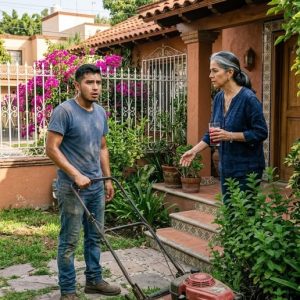
By the time the baby shower was held, Teresa had become almost unrecognizable to the women who had known her for years. When one cousin joked that Mariana had cast some kind of spell over the older woman, Teresa answered that kindness was not a spell and she wished she had learned it sooner. There was no drama in the room after that, only an embarrassed laugh and a quick change of subject. Mariana watched her from across the table and smiled the private smile of someone who had seen the real cost of that sentence.
Labor began just after dawn on a Sunday, eight months after the wedding that had nearly broken the family before it began. This time the house moved with purpose, not chaos. Carlos drove. Teresa sat in the back and counted breaths with Mariana between contractions. At the hospital she stayed in the waiting room because the couple wanted that space to themselves, and for once she accepted the boundary without injury. She prayed, dozed, woke, paced, and stared at the chapel candle machine without buying a candle because she had already spent the entire pregnancy trying to prove her prayer with actions.
When Carlos finally emerged, exhausted and crying with joy, he was carrying a pink hospital cap in one hand as though he had forgotten he still held it. Their daughter was healthy, he said. Mariana was tired but well. The baby weighed six pounds, twelve ounces and had a furious set of lungs. Her name was Esperanza. Hope. Teresa laughed through tears at the choice. It was exactly right. When she entered the room later, Mariana was holding the child against her chest. She looked up, studied Teresa for a heartbeat, and then placed the baby carefully into her arms.
Teresa held her granddaughter as though holding both the future and a repaired fragment of the past. The baby smelled of milk, cotton, and the strange clean sweetness of new life. Teresa did not make promises out loud. She did not trust grand speeches anymore. Instead she kissed Esperanza’s forehead and silently vowed that no fear she had inherited, no bitterness she had cultivated, and no cruelty she had normalized would be passed into these tiny waiting hands. When Mariana asked for the baby back, Teresa returned her immediately and with both arms open, not grudgingly, not possessively, but with respect.
Carlos and Mariana moved into the renovated back apartment when Esperanza was two months old. Teresa cried the day their boxes were carried across the yard, but she cried in private and dried her face before bringing over a pot of soup. She knocked before entering. She never rearranged a drawer that was not hers. On Sundays they ate together under the shade of the guava tree. Sometimes Esperanza slept in Teresa’s arms while Mariana finished lunch in peace. Sometimes Mariana asked Teresa for advice, and sometimes she did not. Teresa learned that love did not shrink when it was given room. It became steadier.
Years later, visitors still heard the story of the wedding and the difficult pregnancy, but not as gossip and never as a lesson about obedience. In the Hernández family it became a warning about the danger of unexamined pain and the ways old wounds can turn into new harm if they are not faced honestly. Teresa did not hide her part in it. She told it plainly enough that shame remained in the telling, and gratitude too. She had nearly repeated the worst thing ever done to her. Instead, at the edge of that failure, she had been forced to choose another way.