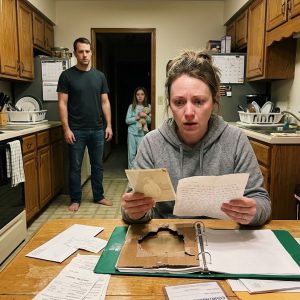
Mariana remained in the hospital overnight. Carlos refused to leave her side. Teresa went home only because Luisa told her someone had to gather clothes, medical papers, and the medicines the doctor listed. The house, which had seemed so untidy that morning, now looked absurdly still. In the dining room she found Carlos’s note under the sugar bowl. She read it once, then again, and had to grip the chair back to keep from falling. She carried the stick from the upstairs floor to the stove and broke it across her knee before feeding the pieces into the outdoor burner. It was a small act, almost ridiculous compared with the damage already done, but she needed to watch that instrument of her anger become ash.
The next day Mariana was stronger, though still pale and frightened. The doctor said she could go home if she remained on strict bed rest and returned for follow-up scans. Carlos handled the discharge papers. Teresa stood at the foot of the hospital bed holding a small container of broth she had made herself. Words jammed in her throat. At last she said Mariana’s name softly, without title, without command. Mariana turned toward her. Teresa apologized in one shaking sentence. She did not ask immediately to be forgiven. Mariana looked at her for a long moment and said she was too tired to talk about forgiveness yet. The answer hurt, but Teresa knew she had earned it.
At home, the rhythm of the house changed. Teresa rose at five as always, but now she kept the broom quiet. She boiled water, prepared medicine, and learned exactly how Mariana liked her toast because nausea made everything else impossible. She knocked before entering the bedroom. She asked rather than ordered. When neighbors came by with gossip disguised as concern and one of them remarked that young brides today spent more time in bed than in the kitchen, Teresa cut the woman off so sharply the room fell silent. She said bed rest ordered by a doctor was not idleness and any woman who had carried a child should know the difference. Mariana heard that exchange from the hallway and looked at Teresa with startled eyes.
Carlos remained wary. He watched every interaction as though expecting the old version of his mother to return without warning. Teresa did not protest. Trust, she understood now, was not something a person requested after causing harm. It had to be rebuilt in small, humiliating, daily ways. She cleaned without theatrics. She carried laundry herself. She stopped referring to Mariana as the daughter-in-law and began saying her name. The first time Carlos noticed it, he lifted his gaze from the table but said nothing. The silence between them was no longer scorching. It was cautious, and that was progress.
One afternoon, about a week after the hospital scare, Teresa found Mariana crying quietly by the open bedroom window. A baby sweater catalog lay folded on her lap, unread. Mariana admitted she was afraid to become attached to the pregnancy now that she had seen how quickly joy could turn to terror. Her own mother lived far away and could not come immediately. She felt guilty for needing so much help in a house where she had wanted to arrive useful. Teresa sat carefully on the chair beside the bed and, for the first time in decades, told the truth about her first pregnancy. She spoke of the stairs, the pails, the bleeding, the older woman who had treated pain as laziness, and the child she never held. Mariana listened without interrupting.