it without anyone in my family touching the paper.
I had planned to move the week after my birthday.
Dad moved first.
After his text, I didn’t go storming into the kitchen.
I got dressed, tucked my folder into my work bag, and walked out with my head down.
Nobody stopped me.
Mom looked at me once, then at the sink.
Delaney had a bright new phone case sitting beside her cereal bowl.
Dad didn’t even bother pretending he wasn’t the reason my chair in the kitchen felt like enemy territory.
At work, I used my first break to call the police non-emergency line.
My voice shook when I explained that an item I had bought with my own money had been sold without my consent.
The officer asked if I had proof it was mine.
I did.
Months earlier, when I first realized I couldn’t trust anything in that house to stay where I left it, I had emailed myself copies of every major receipt I had.
The laptop purchase confirmation was still there, along with the serial number and the charge from my card.
At lunch, I drove to the substation.
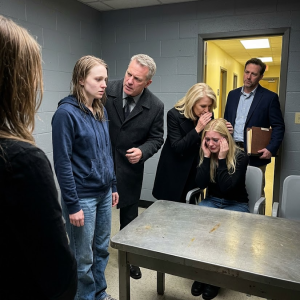
An officer printed the report while I sat in a plastic chair trying not to feel ridiculous.
When he called the pawn shop listed in the sales record Dad had carelessly left in the kitchen trash, the owner confirmed my father had brought it in that morning.
That was the first moment the whole thing stopped feeling like a family argument and started feeling real.
From there I went to the credit union.
Because I was finally nineteen, they let me remove the old link between my checking account and the joint teen account Dad had opened years earlier.
I transferred what I had saved.
Then I called the phone company and the internet provider and took my debit card off the auto-pay settings I had never agreed to keep forever.
The woman at the phone company asked if I wanted to stay on the family plan.
I stared at the fluorescent wall over her desk and said, ‘No.
Just my line.’
Next I checked the email notices tied to Delaney’s school account.
That was when I saw something that made my hands go cold.
Dad hadn’t just used my email as a backup.
He had listed me as an authorized payer.
My name was attached to a tuition plan for $6,184.37, and the signature on the digital authorization wasn’t mine.
I read it three times, my heart punching hard against my ribs.
I had known he borrowed.
I had known he lied.
But seeing my name under a financial agreement I had never signed felt like finding out the floorboards under my bed weren’t wood at all, just paper painted to look solid.
I called the bursar’s office before I could lose my nerve.
I told them the authorization was fraudulent and asked what I needed to do to remove my name.
The woman on the phone went quiet in the careful way professionals do when they know the word fraud changes the temperature of every conversation.
She told me to come in with ID, and she advised me to bring any supporting documentation.
So I printed everything.
The stolen property report for my laptop.
The