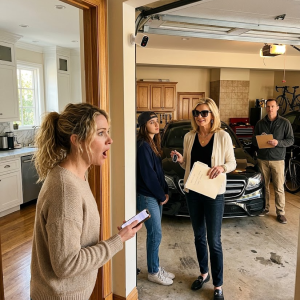
‘Did you know? About me?’
‘Not at first,’ I told her.
‘But I know enough now.’
She nodded once, as if that answer carried more weight than any insult I could have offered, and disappeared down the steps.
Richard watched her go with the expression of a man seeing his second mistake leave before he had even recovered from the first.
The next seventy-two hours stripped him down further than any courtroom could have.
Daniel and Lorraine moved into the hotel Marianne arranged, then into a furnished rental across town.
Richard tried to follow them.
Lorraine refused.
She blamed him for the house, the shame, the lies, the public collapse of a family story they had been telling themselves for years.
He rented a serviced apartment for one month and spent most of it emailing me directly despite the legal instructions not to.
Some messages were furious.
Some were pleading.
A few tried to sound charming, as though this had all been a misunderstanding between two sophisticated adults.
I didn’t answer any of them.
Everything went through attorneys.
At Lane & North, I met with HR, outside counsel, and my COO before business hours on Monday.
Violet resigned by email before the meeting started.
She did not contest the suspension.
She wrote three sentences, all professional, all bloodless.
The middle one said she understood why her continued presence would be disruptive.
That was the closest anyone in that affair came to an apology.
Richard’s parents never returned to the brownstone after the movers finished.
Richard did once, a week later, when Marianne supervised a final collection of items from the garage.
He looked exhausted, older, as though arrogance had a physical maintenance cost and he had suddenly stopped being able to pay it.
As he stood in the front hall, he glanced up at the staircase and said, ‘You could have handled this privately.’
I had thought about that argument many times before he ever voiced it.
People always say revenge is ugly when a woman delivers truth in public.
They almost never say betrayal is ugly when a man stages it in her home.
‘So could you,’ I replied.
He looked at me then, really looked, maybe for the first time in months.
Not with affection.
Not even with hate.
With the stunned recognition of someone who had mistaken kindness for weakness and was now paying interest on the error.
‘You wanted me to look small,’ he said.
I didn’t raise my voice.
‘You did that yourself.
I only turned on the lights.’
He had no answer.
He collected a garment bag, a watch box, some shoes, and left.
The silence that returned after he was gone felt unfamiliar at first.
The brownstone had absorbed so much entitlement for so long that peace almost sounded artificial.
I walked room to room that evening while the late light slid across the restored floors and into the courtyard.
There were no balloons anymore.
No half-finished champagne.
No borrowed voices calling the place home as if repetition could make it true.
There was just mine.
A month later, I hosted a dinner there for my executive team and two longtime family friends who had helped me rebuild more than just the house.
We ate in the room Richard’s mother once called her