understood my hunger for belonging without me ever needing to explain it.
She was funny in a dry, precise way, ferociously smart, and incapable of pretending things hurt less than they did.
When Sarah was diagnosed with stage four pancreatic cancer, my life split open.
People say pancreatic cancer moves fast.
That phrase is too clean for what it feels like to watch.
It was not fast from the inside.
It was relentless.
It was appointments and scans and carefully worded hope that thinned by the week.
I became the person sleeping in chairs, keeping medication lists, tracking symptoms, and learning the exact expression nurses wear when they already know more than they have said.
I did what I was supposed to do.
I filed for a formal leave of absence through my school.
Everything was approved.
One semester, documented, with a scheduled return date in January.
I was not failing.
I was not dropping out.
I was taking care of the only person who had ever felt like family without conditions.
I called Monica because I still believed information shared honestly would be treated honestly.
She sounded sympathetic.
She told me not to worry about telling our parents yet because Mom would overreact and Dad would make me feel guilty.
She said she’d keep it private.
Three days later, my father called me from Hartford at eleven at night and said, ‘Your sister told us everything.’
I still remember the flat cold of his voice.
Not anger first.
Disgust.
According to Monica, I had dropped out, panicked, and invented a caregiving story to hide the fact that I couldn’t hack medical school.
She had screenshots, he said.
Messages where I admitted I was done, admitted I couldn’t keep up, admitted I was lying to them because I was ashamed.
I had sent Monica texts over the previous weeks saying things like I can’t do this today and I’m so tired I can barely think.
She had taken fragments of those, cropped them, altered them, and built a story out of my exhaustion.
When I tried to explain the official leave, my father talked over me.
When I offered to send documents, he said Monica had no reason to lie.
When I begged him to call the dean’s office, he said he would not participate in my manipulation.
Then he told me not to contact them again until I was ready to tell the truth.
I spent weeks trying to prove reality to people who had already chosen the version of me that made the most sense to them.
I emailed leave approval.
I mailed copies.
I wrote letters.
I sent contact numbers.
One envelope came back unopened with my mother’s handwriting on the front.
Return to sender.
No note.
No question.
Just refusal made physical.
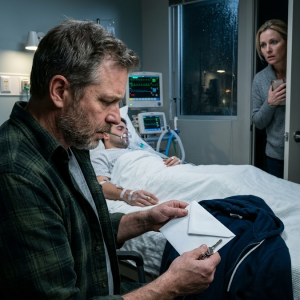
Sarah died in December.
I was alone with her when it happened.
The room was dim except for the monitor light, and when the line went still, I remember thinking that grief can be so large it becomes strangely silent.
I did not call my family.
I had no family to call.
I went back to school because Sarah had believed in me in a way that asked nothing except honesty.
I graduated.
I returned to the East Coast for residency.
I married Evan,