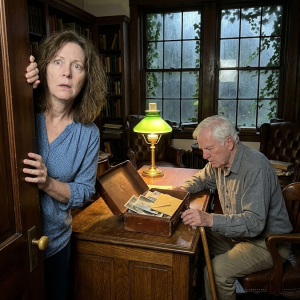
breath, the room went completely still.
Then Richard laughed.
It started low in his chest and opened into something loud and humiliating.
He leaned back in his chair as if I had performed a trick for him.
Evelyn’s eyebrows rose with faint amusement.
“You?” Richard said.
“You think you can divorce this family?”
“I’m divorcing Andrew,” I said.
“Andrew will recover by lunch.” Richard stood, glass in hand.
“You were nothing but a worthless excuse for a wife.”
The words struck where older words had already bruised me.
Evelyn turned a page in her magazine.
“Good riddance, you parasite.
Maybe now this house can breathe again.”
There had been a time when I would have cried.
There had been a time when I would have tried to explain that I had loved Andrew, that I had tried, that I had swallowed more than any wife should be asked to swallow.
I would have begged them to see me as human.
But that woman was gone.
Standing in that study, listening to their contempt, I felt something clean and final move through me.
“Then you won’t mind never seeing me again,” I said.
Richard smiled.
“We were hoping for sooner.”
I turned before either of them could see my hands trembling.
The foyer seemed longer than it ever had.
Every portrait on the wall stared down at me with painted disapproval.
The Whitmore ancestors in dark suits and pearl necklaces looked as cold as the living ones in the study.
I opened the front door myself.
The October air hit my face, damp and sharp.
I rolled my suitcases onto the driveway and stopped beneath the stone portico, suddenly aware that I had nowhere permanent to go.
I had booked a hotel for three nights.
I had a lawyer’s number.
I had a little savings.
I had no plan beyond leaving.
For the first time in years, no plan felt better than that house.
Then the gates began to open.
A black luxury sedan turned into the driveway, moving slowly over the pale gravel.
It was long, polished, and silent, the kind of car that did not belong to someone asking permission.
A small silver emblem sat on the rear door.
I did not recognize it.
Richard did.
He had followed me to the doorway, probably to enjoy the sight of me standing alone with my bags.
But when the car stopped, his expression changed.
Not irritation.
Not confusion.
Fear.
His fingers curled around the doorframe.
His shoulders seemed to shrink.
Evelyn appeared behind him, and for once, she did not look bored.
“Richard?” she said.
He did not answer.
The driver stepped out and opened the rear passenger door.
An older man emerged with careful dignity.
He wore a dark wool coat, leather gloves, and a gray scarf tucked neatly at his throat.
His hair was silver now, but his face struck a memory so deep that for a moment I was six years old again, hiding behind my father’s leg at a funeral reception while adults whispered in corners.
Malcolm Vale.
I had not seen him in nearly twenty years.
My father had spoken his name only once after that day, and even then, he had said it like a warning.
“Some men look generous because they can afford