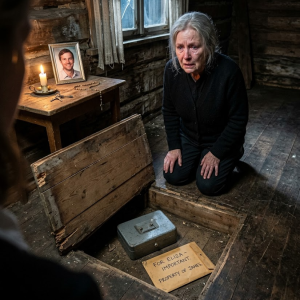
She cried before she answered.
She said she had been protecting Vanessa from herself.
The prosecutor said, ‘And who protected Ruby?’ My mother had no answer that sounded like language.
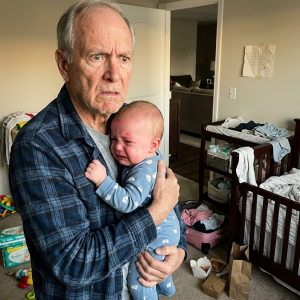
My father looked older on the stand than I had ever seen him.
He admitted he tried to delete the footage because he thought the family should handle it privately.
The prosecutor asked whether he had used the same private reasoning when he told the paramedic Ruby was dramatic.
My father closed his eyes and said nothing.
Vanessa testified against her attorney’s advice because Vanessa had always believed explanation was the same as absolution.
She said she snapped.
She said her life had been falling apart.
She said that cake was the only thing that had been hers all week.
She said she never meant to hurt Ruby that badly.
She did not look at Ruby once.
The jury found her guilty of felony child assault.
My parents avoided trial convictions only by pleading out when it became clear the recordings and footage had destroyed any version of events they could survive.
Probation kept them out of jail, but the charges stayed, and the court orders stayed with them longer.
They lost unsupervised access to any child in the family during the term of those orders.
In the town where my parents had spent thirty years curating a picture of respectability, that mattered almost as much as the court itself.
The criminal case was only the beginning.
Ruby’s surgeries, therapy, specialist visits, visual accommodations at school, and long-term treatment created costs my parents and Vanessa had never imagined because people who excuse violence rarely budget for consequences.
I filed a civil suit on Ruby’s behalf.
My mother called it vindictive.
My father called it unnecessary.
Their lawyers called it aggressive.
The judge called it appropriate.
Their homeowner’s insurance would not cover an intentional assault.
Vanessa had no real assets.
My parents had the house, retirement accounts, my father’s beloved tool collection, and a lifetime of certainty that bad things happened to other people who made worse choices than they did.
They sold the house before the civil case ended because the writing was already on every wall.
The rose bushes were dug up by strangers.
My father’s tools went piece by piece to bidders who didn’t know the history attached to them.
The settlement and judgment covered Ruby’s medical care, future treatment, therapy, and education support.
It did not restore her sight.
It did something more practical: it made sure the people who caused the loss paid for every year that loss followed her.
Vanessa went to prison angry.
My mother moved into a small apartment and spent the first months sending letters I never opened.
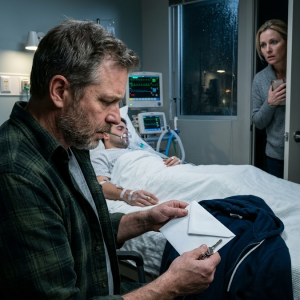
My father mailed one check with a note inside that said only, I should have let you go to her.
It was the closest thing to truth he had ever written to me, and still not enough.
Ruby is eight now.
She turns her head a little farther to the left when someone speaks on that side.
She has learned to catch a ball differently.
She has a seat in class where the board and doorway are easiest for her.
She still hates unexpected hands near her face.
For a while, sudden loud voices