shape of betrayal.
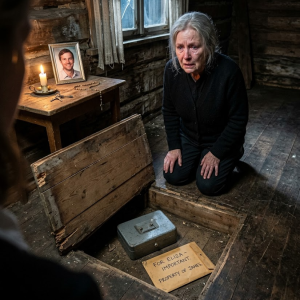
The label had been partly peeled away.
There was no child’s name on it.
No dosing instructions visible.
The officer bagged it immediately, but we did not need a laboratory to understand what Sophie had been trying to survive.
Emily began crying so hard the nurse took the baby gently from her arms.
‘I let him near her,’ she said.
‘I told her to listen to him.’
I held her hand.
‘He fooled you.
That is not the same as choosing this.’
But guilt does not move aside just because someone says the right sentence.
Downstairs, Trevor was detained after trying to leave through a side exit.
Later, we learned his phone contained messages to a friend complaining that Sophie was ruining the first real family he had ever had.
There were searches about custody, adjustment disorders, and whether a parent could send a child to live with relatives after a new baby.
There were videos of Sophie crying.
There were texts to Emily framing every episode as proof that Sophie was unstable, jealous, unsafe.
The investigation took months, and I will not pretend it was clean or easy.
Sophie had to speak to professionals.
Emily had to answer questions that made her feel like a failure even when everyone around her knew she was another victim of Trevor’s control.
There were court dates, protection orders, changed locks, sleepless nights, and a newborn who woke every two hours while the whole house tried to heal.
But Sophie recovered.
Slowly.
For a while, she would not eat anything red.
Not pasta sauce, not strawberries, not tomato soup.
Emily never forced her.
She sat at the table with her, night after night, and let Sophie choose.
Toast.
Bananas.
Buttered noodles.
Cereal with too much milk.
The first time Sophie asked for spaghetti again, Emily called me and cried before she even boiled the water.
I came over.
We made the sauce together in Emily’s kitchen with all the lights on.
Sophie sat on the counter and watched every ingredient go in.
Tomatoes.
Garlic.
Basil.
Salt.
Nothing hidden.
Nothing bitter.
Nothing that required bravery.
When dinner was ready, Sophie took one bite and held it in her mouth for a second.
Emily froze.
I froze.
Sophie swallowed.
Then she looked at her baby brother in his high chair, smearing mashed peas across his tray, and said, ‘He came home anyway.’
Emily covered her mouth and turned away, crying into the dish towel.
Trevor never came back into that house.
His name was removed from every routine, every pickup list, every emergency contact.
Whether the legal consequences felt severe enough depended on who you asked, but the door closed on him for good where it mattered most.
Months later, Sophie drew another picture.
This one showed a house with four people inside it.
Emily.
Sophie.
The baby.
Me, apparently, because she said I was allowed to have the biggest hair.
There was no suitcase outside.
No shadow by the door.
When she handed it to Emily, my sister cried again, but this time Sophie did not apologize.
That was the victory none of us knew how badly we needed.
Some people later said Emily should have seen Trevor’s red flags sooner.
Others said manipulation works because it hides inside help, charm,