she was folding laundry in the kitchen, and in the three seconds it took her to snatch the device off the counter, his face had changed forever.
He did not shout.
He did not smash anything.
He read the messages, set the phone down, and walked out to the garage, where he stayed until midnight.
The next morning he moved his clothes into the guest room.
From then on he spoke to her with terrible courtesy, as if she were a neighbor he was obligated to tolerate.
He stayed in the house, stayed for work, stayed for Jake, stayed for the appearance of structure, but he removed warmth with the precision of a surgeon.
He never called her names.
He never raised his hand.
He simply erased her as a wife while keeping her in place as a function.
Jake was thirteen then, tall for his age, all elbows and bruises and desperate love for a family he assumed was permanent.
Michael came to soccer games.
Susan signed school forms.
They sat on opposite ends of bleachers and coordinated dentist appointments by text even while standing six feet apart.
They never fought in front of him, never poisoned him against the other, never touched.
Over time the quiet hardened into architecture.
Doors closed.
Hallway pauses lengthened.
Meals became transactions.
Susan accepted it all as the price of having been the one who broke the house.
Shame has a way of making even unnatural conditions feel deserved if you stay inside them long enough.
The overdose came six weeks after Michael learned about the affair.
Susan would later understand it had not really been a wish to die so much as a frantic wish to stop feeling like herself.
At the time the distinction meant nothing.
Michael found her on the bathroom floor before Jake got home from practice.
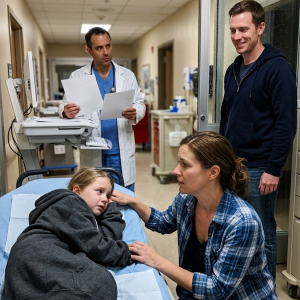
She woke up two days later in a hospital bed with an IV in one arm, a raw throat, and an ache in her lower belly that pulsed every time she moved.
When she asked what had happened, Michael squeezed her hand and said quietly, “They pumped your stomach.
That’s all you need to think about right now.” She had believed him because guilt makes liars easy to trust.
She had also believed him because there was something in his face that day she had not seen since before the affair: fear.
That fear softened him for a few hours, enough that she cried with relief and whispered apologies into the pillow until he told her to stop talking and rest.
After that, the door between them shut for good.
The hand-holding never happened again.
The separate bedrooms became permanent.
Retirement eventually came for both of them, but peace never did.
By the time Susan reached home from the clinic, her palms were slick on the steering wheel.
Michael was in the living room with the afternoon paper folded in neat quarters, his reading glasses low on his nose, exactly where he always sat at that hour.
The normalcy of the scene made something in her snap.
“Michael,” she said.
He looked up once, saw her face, and straightened.
“What happened?”
“For eighteen years I have lived like a ghost in this house because I believed that was what I deserved,” she