It was patient.
Arrestingly tender.
It made the words from the will feel like they belonged to another man entirely, and that made them hurt even more.
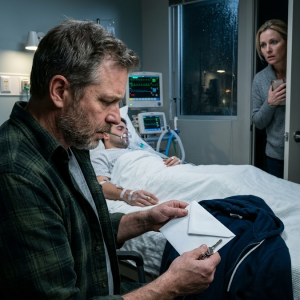
On a writing desk near the fireplace sat a sealed cream envelope.
Her name was written on the front in Richard’s hand.
For Peggy.
She sank into the desk chair before opening it because her knees had started trembling.
The paper inside was thick and folded twice.
The first line was enough to make her shut her eyes.
Peggy, if you are reading this, then I have done the cruelest necessary thing of my life.
She read it again.
And again.
The letter went on in the same disciplined handwriting she had watched Richard use on contracts, correspondence, and birthday cards that somehow always looked formal even when he loved the recipient.
He said he had learned two years earlier that his heart was failing faster than his doctors admitted publicly.
He had also learned something else: his children had become so fixed on protecting their inheritance from Peggy that any obvious attempt to provide for her would trigger a legal war.
Steven had already asked him to restrict joint accounts.
Catherine had privately suggested a postnuptial agreement eighteen years too late.
Michael, thinking Richard too medicated to notice, had once joked in the library that the only way to keep Peggy from taking a bite out of the estate was to feed her crumbs in public and hope she thanked them.
Richard wrote that he had said nothing in the moment because shame worked slowly in him, and often too late.
But he had heard.
He had remembered.
If I left you the visible assets, they would contest the will, call my mind unsound, and drag you through court until grief and legal fees finished what humiliation started, he wrote.
So I chose the one gift they would laugh at long enough for you to reach it untouched.
Peggy wiped her face with the heel of her hand and kept reading.
He had bought Oakwood House thirty-three years earlier after a Sunday drive when she mentioned, almost absentmindedly, that her dream home would be ‘somewhere quiet enough to hear the trees breathe.’ He had intended to bring her there, then postponed it, then hidden it behind the endless machinery of his public life until hiding it became easier than explaining why it mattered.
Over the years, he furnished it slowly.
Maintained it.
Came alone sometimes.
Photographed her always.
It was the only way I knew to keep what I could not say without failing at it, he wrote.
That is not an excuse.
It is the truth.
Peggy pressed the letter flat on the desk because her hands were shaking too hard.
Then the tone of the letter changed.
Beneath his apology was instruction.
In the bottom left drawer of the desk, behind the false back panel, there is a brass box.
Open it with the small key attached underneath the drawer.
Inside are the documents Marcus does not have, because they were never part of my probate estate.
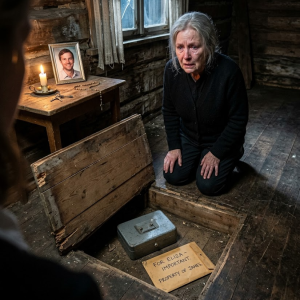
Peggy dropped to her knees and pulled the drawer open.
Her fingers found tape, then a small key.
Behind the panel sat a rectangular brass box just as he had described.
Inside were