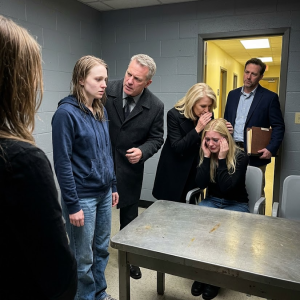
Melissa eventually pleaded to charges connected to what she had done.
She avoided the harshest sentence because she agreed to complete strict conditions, but she did not avoid the record, the supervision, or the truth written in black ink where excuses could not soften it.
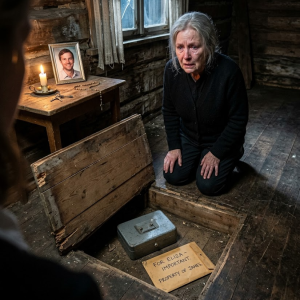
The note remained in evidence.
I sometimes think about that more than I should.
That one piece of paper.
The pink marker.
The casual handwriting.
The terrifying confidence of someone who believed a baby could simply wait for her to feel like being a mother again.
Noah is two now.
He calls me “Pop.” He likes bananas, stacking blocks, and throwing socks into the laundry basket like it is an Olympic event.
He still hates being alone in a room, but he is learning.
Every night, when I tuck him in, he pats the edge of his crib and says, “Stay?”
And every night, I sit down in the chair beside him.
“I’ll stay,” I tell him.
Some people in the family say I was too harsh on Melissa.
They say she was young, overwhelmed, maybe depressed, maybe selfish in a way she could grow out of.
They say calling the police was a line a father should not cross against his own daughter.
Maybe they are right that she needed help.
But Noah needed saving.
And when a child is the one screaming behind a locked door, I do not believe love means protecting the adult who left him there.
I believe love means turning the key, walking in, and refusing to pretend the note on the wall was anything less than the truth.