some clever financial move.
It was desperation dressed in nicer clothes.
Their credit cards were higher than he had admitted.
Christina had spent money on custom drapes, a dining set they could not afford, client dinners, holiday photos, landscaping, and a branding consultant who had told her appearances mattered in their neighborhood and in Daniel’s line of work.
Daniel had gone along with it because he kept telling himself the next quarter would be better.
Meanwhile the mortgage became the bill he never felt urgently enough because his mother always caught it before it hit the floor.
Temporary had become normal.
The next evening they came back to Patricia’s office.
This time Daniel looked tired instead of defensive.
Christina looked furious in the quiet, controlled way she wore like jewelry.
She said I was punishing Lily over adult mistakes.
She said I was turning family into a legal matter.
She said decent mothers did not put liens against their children’s homes.
I asked her what decent daughters-in-law did with mothers who arrived in the cold carrying pain relief for their sons.
Daniel spoke before she could answer.
He said there would be no gift letter.
He said they could not afford the house, not honestly, and he would not ask me to lie so they could keep living inside a version of themselves that depended on me staying invisible.
Christina turned to him as if the room had tilted.
She asked whether he was really choosing his mother over his marriage.
Daniel said no.
He was choosing not to bury his mother under their image any longer.
In the end they listed the house.
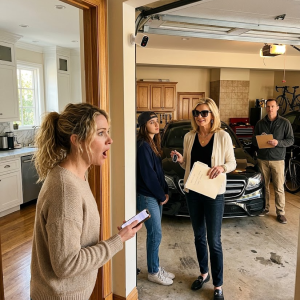
The market was still decent, and the maple out front looked good in photos.
Lily cried when the realtor came to measure rooms.
Daniel told her they were moving somewhere smaller for a while.
When she asked why they had to leave the tree, he said because grown-ups sometimes buy more than they can carry.
I did not go to the open house.
I did not drive by during showings.
I went to work.
I checked supply orders.
I signed crew schedules.
I cleaned a marble lobby on a Thursday night and listened to my own footsteps echo in a building full of people who would never know how close kindness can come to becoming a debt trap when it is undocumented.
Two weeks later they had an offer.
At closing, Patricia sat beside me while papers changed hands and signatures moved across glossy pages.
My repayment was listed plainly, not tucked into anybody’s shame.
Fifty thousand four hundred dollars, plus legal fees and a modest amount of interest Daniel had insisted on after the sale price came in stronger than expected.
Patricia waited until the funds cleared.
Only then did she hand me the release.
I signed it with a steady hand.
I did not feel triumph.
I felt weight leaving.
A few days after closing, Daniel came by again with a grocery bag in one hand and the heating pad in the other.
He said he had found it in the front closet while packing, still untouched, and that seeing it there had made him sicker than the sale itself.
Then he said the sentence I had needed months earlier.
He said, I left