black ink.
C.V.
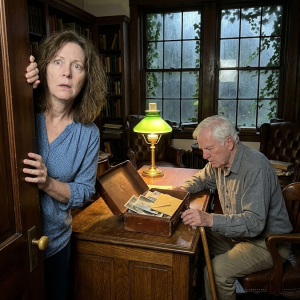
Rocco opened the notebook.
What Owen had hidden was not poetry, not panic, not a dying man’s guesswork.
It was method.
Truck numbers.
dates.
storage locations.
Household addresses marked with notes like widow, deceased worker, easy pressure.
Beside several entries were the same initials that sat at the bottom of the collection slip.
Carlo Vescari.
Rocco’s finance chief.
His most trusted collector.
A man who had spent twelve years standing three feet to his left in meetings and calling him brother in public.
For the first time since entering the house, Rocco felt something close to shame.
Not because he had ordered this.
He had not.
Shame because a machine built in his shadow had become comfortable eating children, and he had not seen it quickly enough.
He closed the notebook and stood.
“Luca,” he said, his voice quiet in the way that frightened people more than yelling ever could, “move them now.
Somewhere warm.
No one hears where.
No one asks questions.”
Within the hour, Lena and the children were in a furnished apartment above an old bakery one of Rocco’s legitimate companies owned.
Dr.
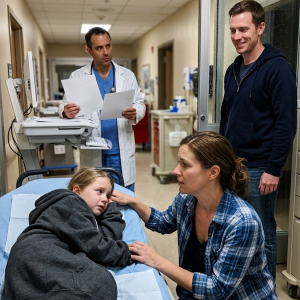
Bell treated Lena for dehydration and malnutrition, checked Noah’s cough, and wrapped Emma’s arm after examining the bruises.
Someone brought clean clothes.
Someone else brought formula, diapers, fruit, broth, and enough groceries to make the tiny kitchen smell alive.
Emma sat at the table in borrowed pajamas, staring at a bowl of macaroni as if she could not believe food was allowed to arrive in whole bowls and not in traded fragments.
Lena tried to thank Rocco.
He cut her off with a slight shake of his head.
“This isn’t charity,” he said.
“It’s restitution.”
Then he left and went hunting.
By midnight, his accountant Rosa had pulled three years of side books from shell companies tied to Carlo Vescari.
By one in the morning, she was at Rocco’s private office with a laptop open and her expression gone flat with disgust.
Carlo had built an extortion ring inside the legitimate freight business, using dead workers, disputed insurance claims, and fake protection debts to shake down families who were too scared or too broke to fight back.
The stolen belongings were not random trophies.
They were inventory.
He moved them through a secondary warehouse under a salvage company and resold what he could.
The rest he stored until families gave up hope or stopped asking.
On paper, it looked like disposal.
In real life, it looked like Emma’s bike being worth more than the people who took her crib.
Rocco drove to the riverfront warehouse before dawn with Luca and Rosa.
Inside, under flickering fluorescent lights, rows of tagged furniture sat beside boxes of clothing, children’s toys, kitchen appliances, and framed photographs.
Whole lives were stacked on pallets and marked for sale.
Rosa checked the notebook against the tags, and the pattern emerged with sickening clarity.
There were eleven families.
Lena’s was only the latest.
Near the back wall, under a tarp, Rocco found a white crib with one chipped rail and a blue moon painted on the headboard.
Emma had described it in the car without realizing she was describing evidence.
Next to it sat a plastic tub filled with baby blankets, one of them embroidered with the name Noah.