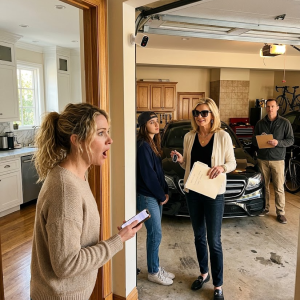
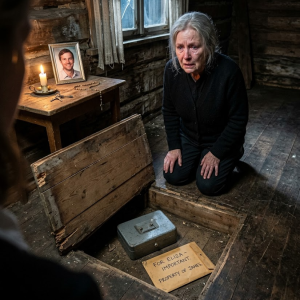
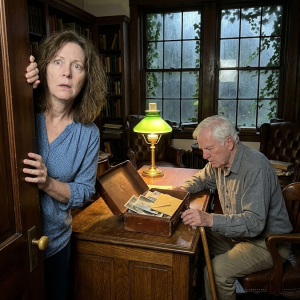
while I chose paint colors and told me no office should look like it belonged to a man who hated being alive.
When Sydney finished, I asked the only question left.
“And me?”
Edwin answered, because he always liked to deliver the prettier version of a hard thing.
“There’s the life insurance policy,” he said softly.
“Two hundred thousand.
Enough to get you settled.
And thirty days in the house, of course.”
Enough.
I was sixty-three years old.
I had given up my interior design practice years earlier because Floyd’s life had become too large, too public, and too structurally demanding for us both to keep pretending a marriage that size ran on love alone.
I managed the homes, the staff, the travel, the renovations, the dinners, the donors, the holidays, the emergencies, the invisible labor that allows powerful men to look serene in photographs.
Then I managed his illness.
I became the person who knew which pain medicine made him nauseous, which blanket he wanted when the chills came, and how to sit beside him in silence without making him feel watched.
And his sons were offering me a check and a month to disappear.
Then Sydney placed a second document in front of me.
That was when the insult became strategy.
The paper was a waiver.
If I signed it, I would give up my spousal claim to the probate estate, any right to remain in the Sacramento house beyond thirty days, and any authority over Floyd’s company or properties.
They wanted a clean transfer and immediate control.
No contest.
No delay.
No widow in the way of what they had already begun calling the family assets.
I did not cry until after they left.
I held myself together until the front door closed, until their polished shoes were off the driveway, until the house was quiet enough for the grandfather clock to start sounding cruel.
Then I called Mara Levin.
Mara had been our attorney for years—sharp, discreet, impossible to rattle.
She arrived before dusk, still wearing her courthouse heels and carrying two files.
She read the documents once standing in the kitchen, then again sitting down, then took off her glasses and stared at me over folded hands.
“Do not sign this tonight,” she said.
I asked her what Floyd had done.
She hesitated just long enough for me to understand the answer mattered.
“He reorganized quite a lot six months ago,” she said.
“Most of the liquid money is not in the probate estate anymore.
Neither are the retirement accounts.
The life insurance comes directly to you.
The joint accounts came to you the moment he died.
There’s also a marital trust he funded before the last hospitalization.”
I blinked at her.
“Then what exactly are they fighting me for?”
Mara let out a humorless breath.
“The visible things.
The houses.
The company.
The land.
The names on the deeds.”
“And what’s attached to them?”
That was when she looked at me differently.
“Everything,” she said.
“Loans.
Operating obligations.
Deferred taxes.
The bridge note on Tahoe.
The environmental remediation order on the Fulton warehouse.
The partner buyout clause tied to Floyd’s death.
Cross-collateralization on the Sacramento property.
None of it is small.”
I stared at her.
“If I let them take it,” I said slowly,