The sound of the crash stayed in my body longer than the pain did.
For weeks afterward, I could still hear it when the house was quiet: the violent slam of metal folding into metal, the pop of the airbags, the thin raining noise of shattered glass.
But in the first few minutes after it happened, none of that felt real.
What felt real was the sudden silence after impact and one thought ripping through my head so hard it drowned out everything else.
Owen.
I twisted as much as the seat belt and pain would let me.
The infant seat in the back had tipped, but it had held.
He was screaming—furious, alive, terrified.
That cry was the only thing that kept me conscious until strangers were pulling at my door and someone kept telling me not to move.
By the time we got to Franklin Memorial Medical Center, my body had started to understand what my mind still refused to.
Every breath hurt.
My left shoulder felt half-attached.
My hips lit up with white-hot pain every time anyone tried to shift me even an inch.
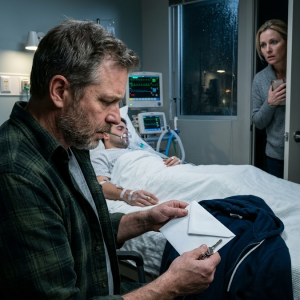
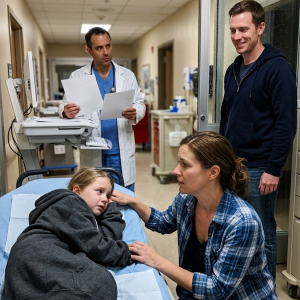
A nurse checked Owen first.
He had a bruise near one temple from the sudden jolt, but the car seat had done its job.
He was okay.
I heard those words through the fog and clung to them like a rope.
Then the doctor came to my bedside and gave me the rest of the truth.
Fractured pelvis.
Torn shoulder ligament.
Strict instructions not to lift anything heavier than a few pounds.
Several days in the hospital, then weeks of limited movement at home.
When she said, “You won’t be able to pick up your baby for a while,” I felt something primal turn to panic.
Owen was six weeks old.
Six weeks.
He still curled himself around my chest when I fed him, still startled at shadows, still made those tiny searching sounds when he needed comfort.
Jacob was supposed to be back that evening from a work conference in Denver, but a snowstorm had shut the airport down.
He kept calling, his voice strained and useless with worry, telling me he was trying every route he could find.
None of that changed the immediate problem.
I had a newborn.
I had a broken body.
And I had one night to survive.
So I called my mother.
Susan lived twenty minutes away in the same four-bedroom colonial house she’d lived in since I was fifteen.
The same house my father had worked overtime to keep.
The same house she had cried in nine years earlier, sitting at the kitchen table after Dad died, telling me she didn’t know how she would make the mortgage alone.
That was the day I became her safety net.
I was twenty-six then, newly established in a corporate accounting job, still deep in my own grief, still naïve enough to think sacrifice automatically built loyalty.
I told her I would help until she got stable.
The help never stopped.
Every month for nine years, $4,500 left my account and landed in hers.
Sometimes more, when there was a furnace issue or an insurance increase or groceries she couldn’t cover before payday.
I paid without drama because my mother never asked sweetly.
She asked like the world was